What to Make with These Ingredients: The AI-First Method
Summary
You type what to make with these ingredients into an AI and usually get a plausible list that quietly assumes a full pantry. This article covers which tools give real answers, how to prompt them past the generic output, and why video-based recipe discovery beats text lists for ingredient-first cooking. Five Mediterranean pantry combinations that always produce something real are included, along with a framework for what most AI recipes quietly skip: fat, acid, and the re-seasoning step at the end.
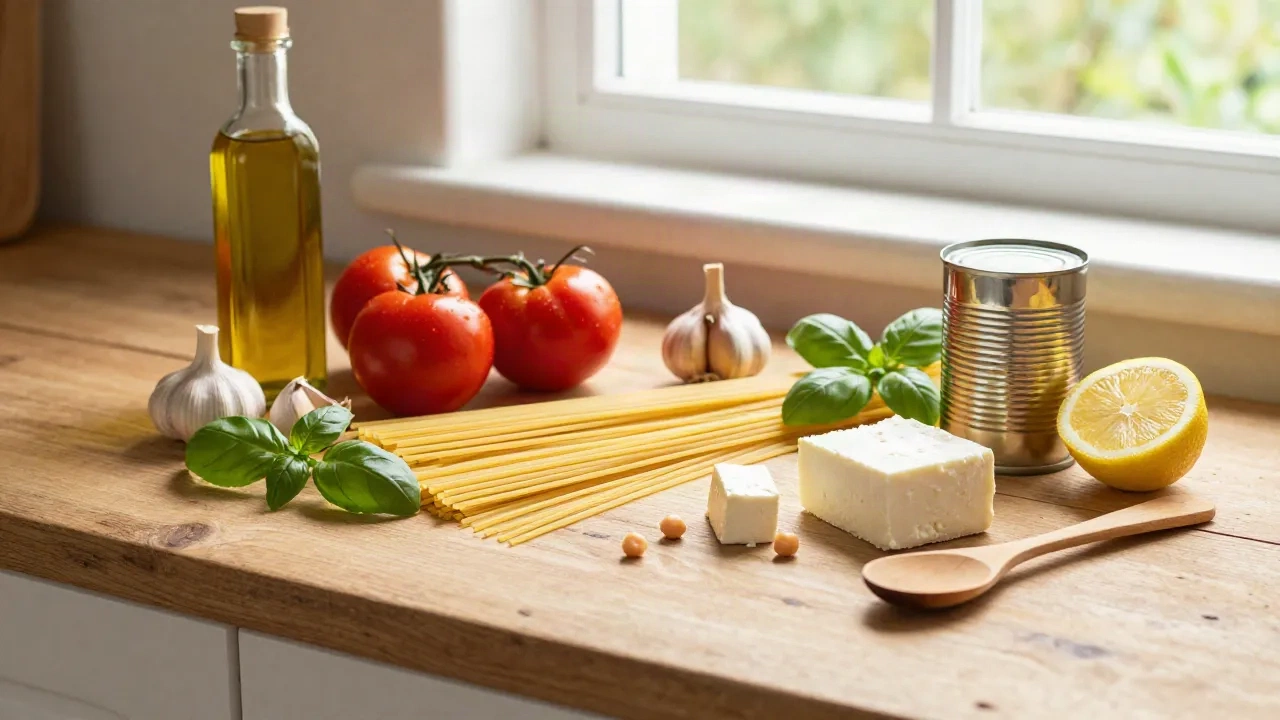
You have half a can of chickpeas, an onion, a tomato going soft, three eggs, and a leftover slice of feta. You ask yourself: what to make with these ingredients? The answer is less of a guess than it used to be. AI tools have gotten genuinely useful here, especially when you know how to push them past the obvious.
This article covers how the main AI tools handle ingredient-first cooking, where they fall short, and five combinations from a Mediterranean pantry that always produce something you can eat tonight.
The question changes when you stop pretending you have everything
Most recipe sites assume you have everything except the star ingredient. You land on a "chickpea stew" article and halfway through the prep list, you need vegetable broth, smoked paprika, and preserved lemon. You have tap water, regular paprika, and a lemon that is mostly air.
The constraint is the whole point. Figuring out what to make with what you actually have, right now, without a trip to the shop, is a different problem from "what recipe should I follow." AI tools solve this second problem better than any search engine, provided you give them the real constraints.
Three things to know before you start:
The more specific you are, the better the suggestion. "Eggs, feta, tomato" gets a frittata. "Two eggs, 60g feta, one medium tomato, no oven" gets something more useful.
Most AI tools assume a full spice rack. Say so if you do not have one.
Cooking time is a real constraint. "I need this in 25 minutes" changes the output more than most people expect.
What ChatGPT gets right when you type your ingredient list
ChatGPT handles ingredient-first queries well when the request is specific. Type "I have pasta, a can of tomatoes, garlic, olive oil, and dried oregano. What can I make for two people in 20 minutes?" and you get a workable aglio e olio variant or a quick marinara. The suggestions are competent and usually structurally sound.
The weakness is calibration. ChatGPT does not know your skill level unless you say so. It will happily tell someone who has never made a pan sauce to "emulsify the pasta water" as if that were a two-second step. It also tends to add ingredients it assumes you have. Three times out of five, it sneaks in "a handful of fresh basil" or "parmesan to finish," neither of which you have.
The fix is a single sentence at the end of your prompt: "Do not add any ingredient I have not listed." It changes the output significantly. The suggestions become tighter and the recipes actually match your situation.
Where AI tools for ingredient-based cooking actually fail
The gap that shows up consistently is technique. AI tools tell you what to make. They do not tell you how to make it work when your constraints are tight. "Make a pan sauce" assumes you know the pan temperature and the window for deglazing. A video cook who does this in ten seconds shows you what the pan should look like at each point. A text instruction does not.
Two specific failures that come up regularly in ingredient-first cooking:
Oral measurements: many video recipes say "a good glug of olive oil" or "cook until it smells right." AI tools that parse video transcripts often skip these cues or convert them arbitrarily. 60ml is not always what the cook meant by "a good glug." Sometimes it is 15ml and sometimes it is 90ml depending on the dish and the cook. The text version loses this entirely.
Substitution logic: if you ask an AI "I do not have smoked paprika, what do I use?", it usually says "regular paprika plus a pinch of cumin." That is technically defensible but it does not tell you to reduce the quantity. Smoked paprika is more assertive per gram than regular paprika. A 1:1 substitution often unbalances the dish in ways the AI does not flag.
These are not failures of knowledge. They are failures of format. Text can say "season to taste." Video shows you what that means on this specific dish at this specific point in the cooking.
Five Mediterranean pantry combinations that always produce something real
If your pantry runs on Mediterranean basics, five combinations cover roughly 80% of weeknight situations. These are not recipes, they are problem-solving pairs: what you have and what it produces.
1. Chickpeas, canned tomatoes, garlic, olive oil You are 20 minutes from a chickpea stew that works. Add cumin and smoked paprika if you have them. If not, plain garlic and a bay leaf still gets there. Serve on toast or with rice if you have either. If you have neither, serve it in a bowl and call it a meal.
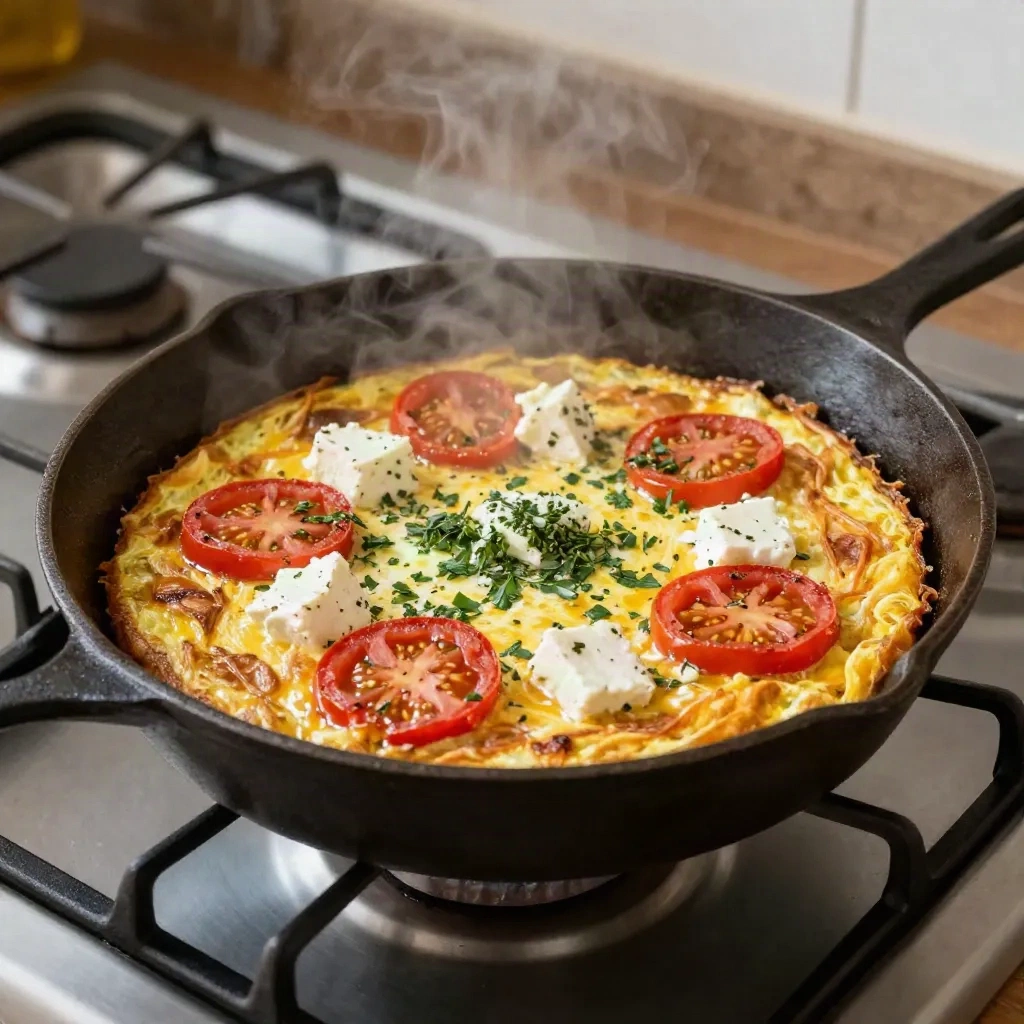
2. Eggs, any soft cheese, any allium A frittata or scramble covers breakfast, lunch, or dinner. Feta works. Goat cheese works. Leftover halloumi from a grill works if you crumble it small enough that it melts partway. The allium (onion, shallot, leek, spring onion) gets cooked until soft first, about 8 minutes on medium heat. Rushing this step is the most common reason a frittata tastes flat.
3. Pasta, olive oil, garlic, anything you have Aglio e olio is the base and it takes 15 minutes. From there: add canned tuna, leftover roasted vegetables, chilli flakes if you have them, capers if you are lucky. The formula is garlic cooked slowly in oil until golden (not brown), pasta water added to create a sauce, pasta folded in. This is the most forgiving formula in a Mediterranean kitchen.
4. Lentils, onion, lemon Mujadara without the rice is still a lentil dish and a good one. Cook lentils in salted water until tender (about 25 minutes for green, 15 for red). Caramelise onions in olive oil for 15 to 20 minutes. This is the part most people rush and should not: the onions need to be genuinely soft and starting to turn brown before they are done. Combine, finish with lemon juice, and serve.
5. Greek yogurt, cucumber, garlic Tzatziki from scratch in five minutes. Grate the cucumber, squeeze out the water, mix with yogurt, crushed garlic, salt, and a thread of olive oil. Works as a dip, a sauce for grilled anything, or a base for a cold lunch with whatever bread or crackers you have.
Why video recipes solve the constraint problem better than text
A cook on video already solved your problem before you started watching. They opened their fridge, used what they had, and made something that worked. When you watch a recipe that starts with "I had this leftover chicken and some tomatoes," that cook is operating under constraints similar to yours. The video is the result of the same decision-making process you are trying to do right now.
Text recipes are usually written backward from the finished dish. The cook made something good, then described how to reproduce it with ideal ingredients. Video recipes, especially the informal kind on TikTok or YouTube Shorts, are often built forward from available ingredients. That is a structural difference, and it makes them more useful when you are working with a partial pantry.
The limitation is searchability. You cannot search a video the way you search a recipe index. "Mediterranean lentil dish without rice, under 30 minutes" gets you close in a text search but frustrating in a video search. The practical workaround: find a video that matches your situation, then convert it to a structured recipe so you can follow it step by step while your hands are busy. That is the core use case Reel2Recipe was built around.
How to prompt any AI tool so it stops giving you generic suggestions
Three specific additions to any ingredient-first prompt that reliably improve the output.
First, state your hard constraints explicitly. "No oven" or "stovetop only" eliminates a third of the suggestions immediately. "Under 30 minutes" eliminates another third. "I have no food processor" changes a hummus suggestion to a mashed chickpea suggestion. What remains after you add these constraints is usually what you can actually make tonight.
Second, state what you do not have. "I have no fresh herbs" or "I only have one egg" changes the recipe the AI proposes. Without this information, the AI defaults to ideal conditions. With it, the output tightens to match your actual situation. A prompt like "I have pasta, garlic, olive oil, and one anchovy. No cheese, no fresh herbs, no cream. What can I make for one person in 20 minutes?" gets a more accurate answer than "pasta, garlic, oil, anchovy."
Third, ask for a confidence rating. A prompt that ends with "which of these can I make with exactly the ingredients I listed, and which requires at least one item I have not mentioned?" forces the AI to sort its suggestions by feasibility. Most tools do this correctly when asked. It saves you from starting a recipe and hitting a wall at step three because you are missing something.
Once you have a recipe, working from it while cooking is a separate problem. Hands covered in egg or dough and a phone touchscreen do not mix. Listening to a recipe read aloud while you cook is genuinely more practical than glancing at a screen. Audio playback of recipes lets you keep your hands in the pan and your attention on what is happening in front of you, not on the screen.
The element most ingredient-first recipes quietly assume you have
Salt, fat, acid, and heat. The framework is useful not as a philosophy but as a practical checklist for when a dish does not taste right and you cannot immediately say why.
Most ingredient-first AI recipes assume you have adequate salt and a neutral fat to cook in. They do not flag when your dish tastes flat because you skipped the acid step, or when your frittata is dry because you used too little olive oil in the pan. These are easy corrections once you know to look for them, but they are almost never addressed in ingredient-first recipe generation because they live outside the ingredient list.
The practical version: before you serve anything you cooked from a short ingredient list, taste it. Add a squeeze of lemon or a small splash of vinegar if it tastes like it is missing something but you cannot say what. Add olive oil if it feels dry or thin. Re-season with salt if it tastes muted. This step recovers more undercooked recipes than any substitution logic does.
A habit worth building: keep a running note of what you actually have in your pantry and update it roughly once a week. When you ask an AI what to make with these ingredients, you can paste the actual list rather than reconstructing it from memory at 19:30. Paired with an AI that can suggest meals from an ingredients list, this takes two minutes to set up and saves the full decision-making overhead every night you use it.