Meal Prep for Weight Loss From Your Saved Cooking Videos
Summary
Meal prep for weight loss works when you cook once, portion honestly and keep a calorie deficit you can sustain. Saved cooking videos rarely give quantities, so convert each one into a written recipe first, then divide it into the meals you want and weigh oil, grains and cheese. Cook for Monday to Thursday, since the USDA says leftovers keep 3 to 4 days, and freeze the rest on day one. This guide gives a two-hour Sunday routine.
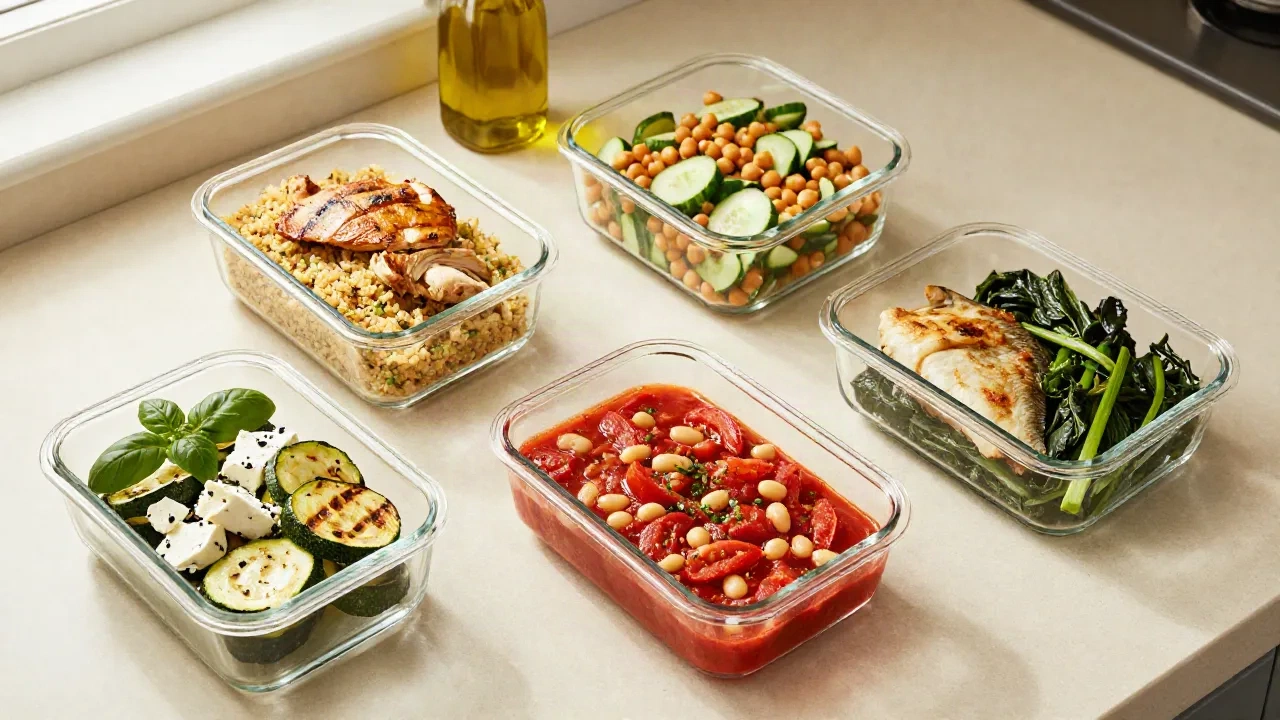
Meal prep for weight loss works when you cook once, portion honestly, and keep a calorie deficit you can live with. The video you saved on Sunday is the weak link: most cooking clips never state portions, so you end up guessing. Fix that first. Turn each saved video into a written recipe with real quantities, then batch the ones that fit your week.
Why most saved cooking videos fail as meal prep
You have 140 saved Reels and no plan. That is the usual starting point. A video is built to be watched once, not to be portioned into five lunches.
The problem is not taste, it is missing numbers. A creator says "a good glug of olive oil" and "one tin of chickpeas", then serves it to a plate that looks like two portions. Multiply that by five containers and you have no idea what you are eating.
For weight loss, the numbers are the whole point. A review of diet strategies published in a medical journal puts it plainly: an energy deficit is the most important factor for weight loss. Everything else (low carb, Mediterranean, plant-based) is a way of making that deficit easier to live with.
So the job before you cook anything is boring but useful: get a written recipe, with quantities, out of the video.
How to turn a saved video into a prep-ready recipe
Three steps, in this order. Skip one and you will be pausing the video at 19h30 again.
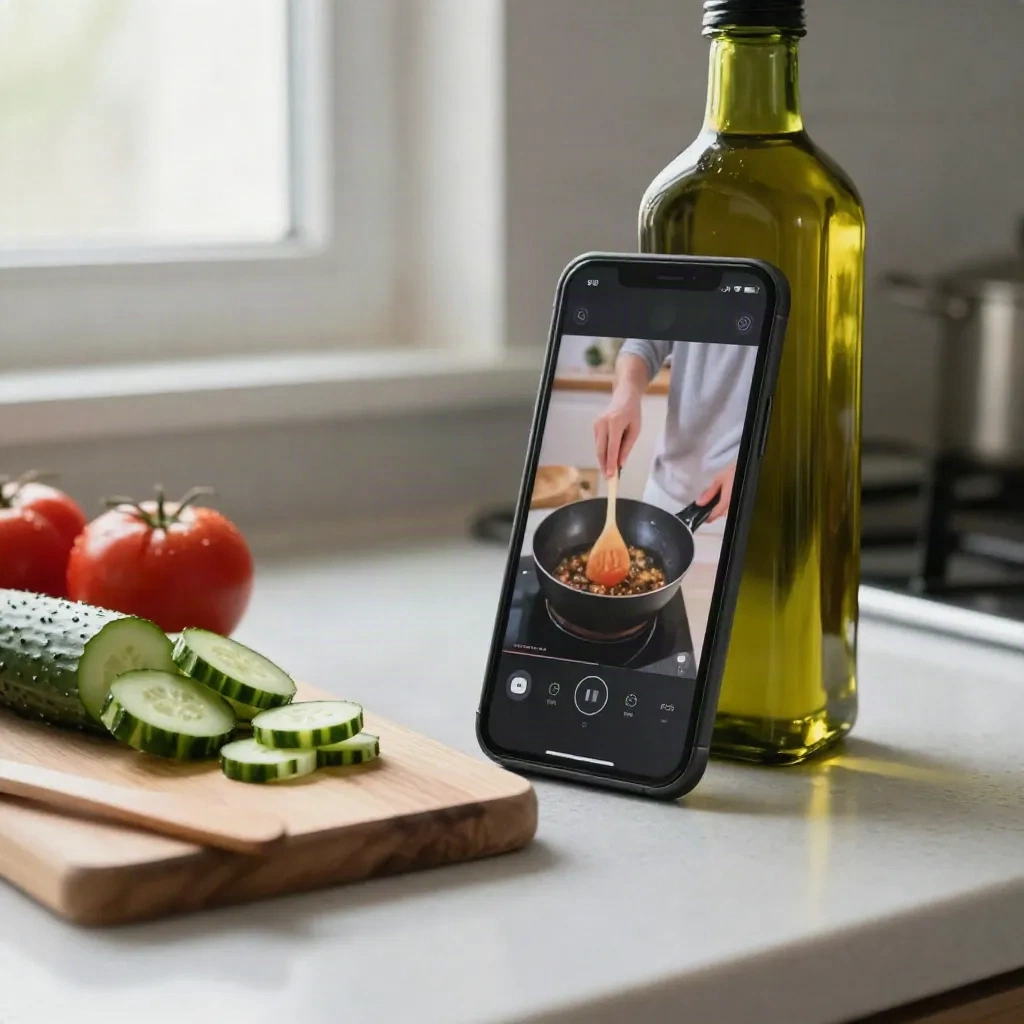
Pull the recipe out of the video. Share the Reel or TikTok to a tool that reads the audio, the captions and the on-screen text. Samsung Food, ReciMe and Reel2Recipe all do this. Check the result against the caption: spoken quantities are where the AI slips.
Fix the portions. Divide the recipe by the number of meals you actually want, not the "serves 4" the creator wrote. A pot that serves four at a dinner table serves six at a lunch box.
Weigh the fat and the grains. Oil, rice, bulgur and cheese are where a 450 kcal lunch becomes 700. Weigh them once, write the number on the recipe, never think about it again.
The AI is a helper here, not a nutritionist. It will happily turn "a pinch" into a teaspoon and "2 cups" into millilitres without asking whether you wanted grams. Read the converted line before you trust it.
What a weight-loss prep plan looks like in real life
There is no magic menu. There is a structure that holds up on a tired Wednesday.
Dietitian-reviewed guidance from Healthline suggests starting small: prep a few meals a week rather than all twenty-one, and build each one around protein, fiber and fat. Protein is the most filling of the three, and it helps keep muscle while you lose weight. That matches how Mediterranean cooking already works.
Here is a plan shape that fits it, and it works whether the recipes come from a magazine or from a TikTok you saved in March:
Two proteins. One cooked in the oven (chicken thighs, baked cod), one from the pantry (chickpeas, white beans, lentils).
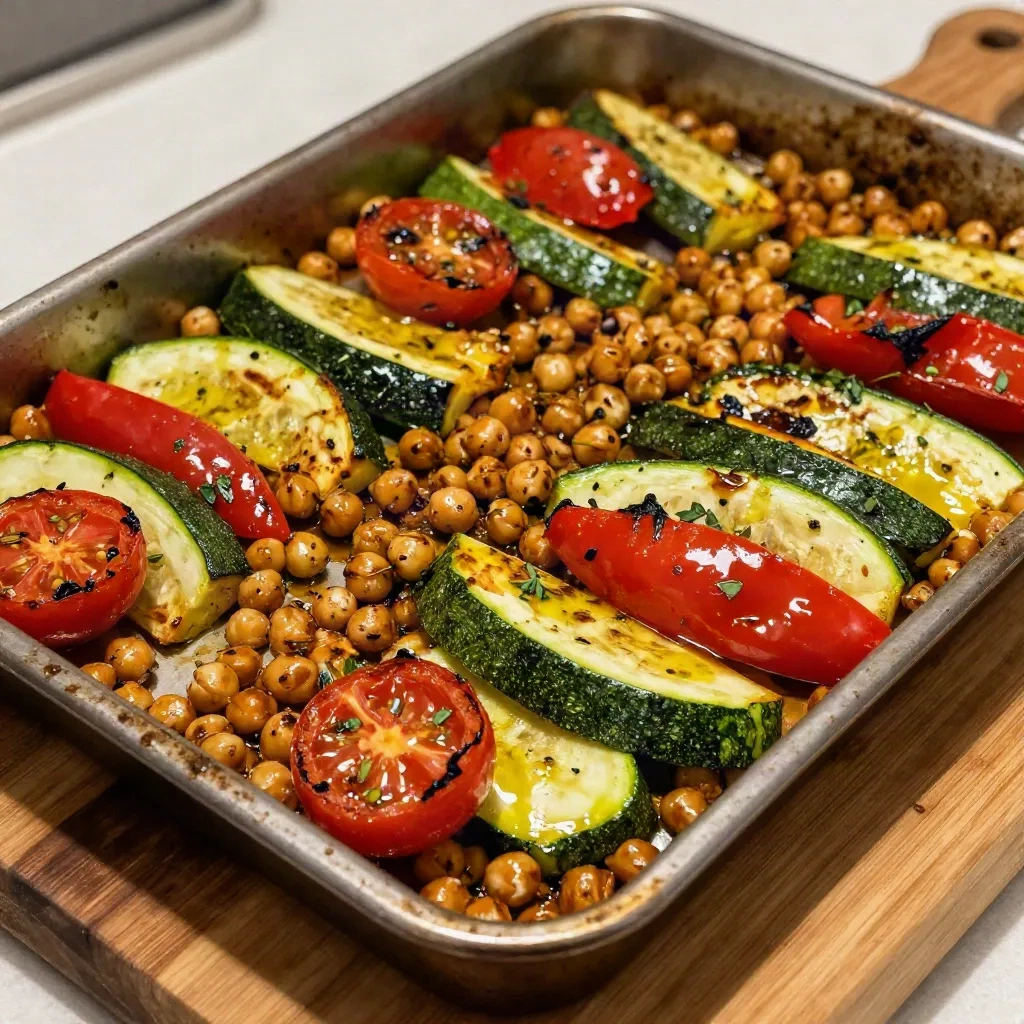
Two vegetables. One roasted, one raw. Zucchini and peppers roast well; cucumber and tomato stay crunchy for two days.
One grain or starch. Bulgur, brown rice or potatoes, weighed.
One sauce. Lemon and olive oil, yogurt and garlic, or a tomato base. The sauce is what stops day four from tasting like day one.
That is a Greek-style lunch bowl, a white bean and tomato stew, and a roasted vegetable tray with feta. Three recipes, about two hours on a Sunday, and two or three days of variation just by mixing the parts.
If a video calls for deep frying or half a block of cheese, skip it for prep week. It is fine as a Friday dinner. It is a poor Tuesday lunch.
Should you count calories, or just cook the plan?
Both can work, and the honest answer depends on you. Healthline's guidance says you do not have to count calories, and warns against rigid plans under 1,500 calories a day handed out without a professional. Very low calorie diets can give fast results, but people tend to regain the weight when they go back to normal eating.
My rule of thumb for a home cook: weigh the three things that swing calories most (oil, grains, cheese), fix the portion once, and then stop measuring. You get most of the accuracy for a tenth of the effort.
If your goal is a specific number, ask a doctor or a registered dietitian for a calorie range before you set it. An app can total what you cooked. It cannot know what your body needs.
Macro-driven planners like Eat This Much generate a week of meals from calorie and macro targets, and build the grocery list from them. The catch: their recipe library is fairly small and starts repeating after a few weeks, and they do not import videos. Good for the skeleton of a plan, less good for food you are excited to eat.
The 3 to 4 day rule nobody puts in the video
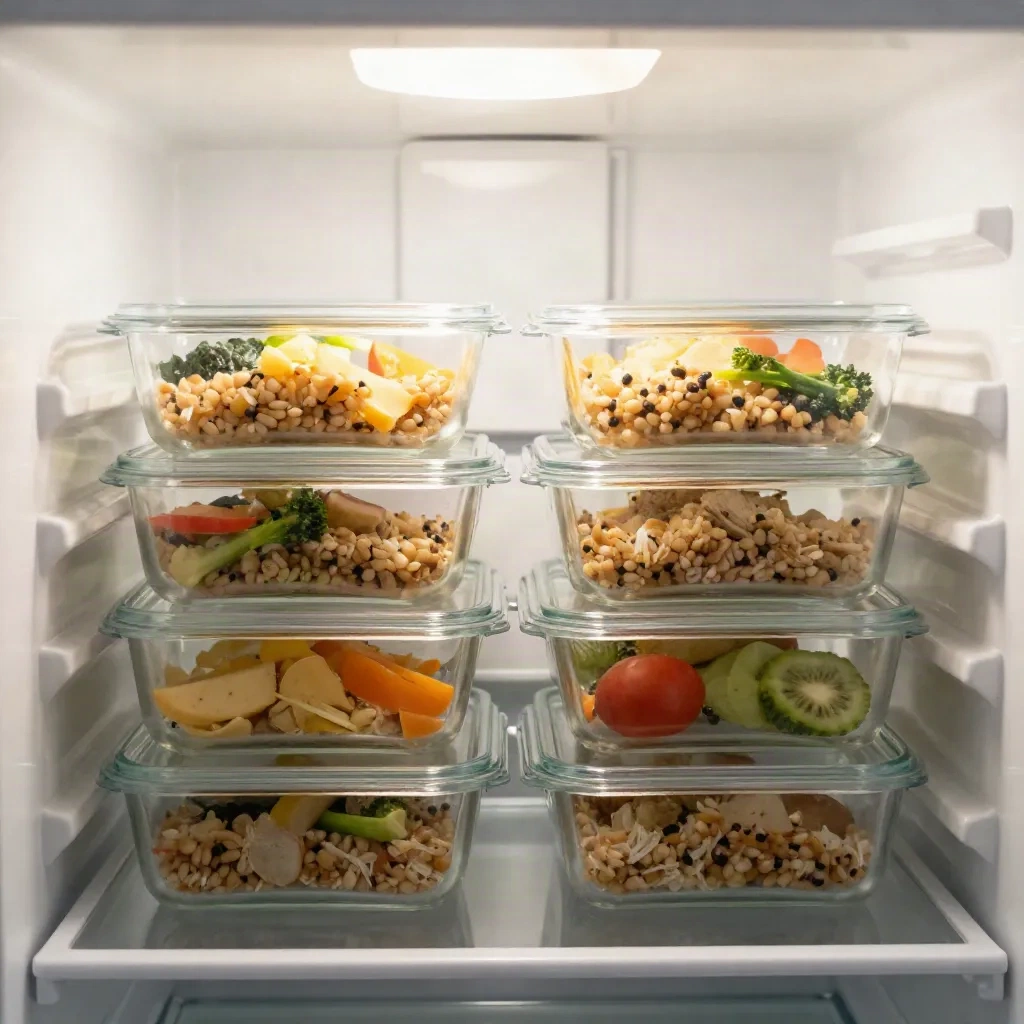
Here is where the "prep seven lunches on Sunday" advice breaks. The USDA says cooked leftovers keep 3 to 4 days in the fridge, or 3 to 4 months frozen for most dishes. Soups and stews hold 2 to 3 months in the freezer.
That changes the plan. Sunday cooking covers Monday to Thursday. Anything for Friday onward goes in the freezer on day one, not on day four.
So split the week in two:
Fridge meals (Mon to Wed or Thu): salads, grain bowls, roasted vegetables, fish.
Freezer meals (later in the week): stews, soups, bean dishes, meatballs, cooked chicken in sauce.
Freeze flat in portions, cool the food first, and label with the date. A white bean and tomato stew from a saved Reel is exactly the kind of dish that freezes well and tastes better after a day.
Which tool should plan the week?
It depends on where your recipes come from, which is the whole point of saving videos in the first place.
TikTok, Reels, YouTube: a video importer (Samsung Food, ReciMe, Reel2Recipe).
A curated library with a grocery list: Mealime.
Macro targets and no cooking inspiration: Eat This Much.
Websites you already bookmark: Plan to Eat, which imports from any site through a bookmarklet.
ReciMe saves recipes from Instagram, TikTok, Facebook, Pinterest and YouTube, and its free plan caps imports at 5 a week. That is enough to test, but a real Sunday batch of 8 or 10 saved videos hits the cap quickly. Samsung Food gives 3 free AI scans on a basic account, so the same maths applies.
Mealime does the opposite: dietitian-approved recipes from its own library, leftover-aware batching, a grocery list grouped by aisle. No video import. If your problem is "I never know what to cook", it is a cleaner start than 140 saved Reels.
Where ChatGPT fits: pasting a recipe in and asking it to scale to six portions works, but check ratios. It is a calculator with opinions.
A Sunday routine that takes about two hours
This is the order that keeps the kitchen from turning into chaos.
Minute 0 to 10: Preheat the oven to 200 C (400 F). Put the grains on to cook. Open your three recipes, already converted and portioned.
Minute 10 to 30: Chop the vegetables for the roasting tray and toss them with olive oil. Season the protein.
Minute 30 to 60: Everything in the oven. Make the stew on the stove while it runs.
Minute 60 to 90: Make the raw salad base and the sauce. Do not dress the salad yet.
Minute 90 to 120: Cool, portion into containers, write the day on each lid, freeze the Thursday-onward meals.
The one rule: do not dress salads or sauces until the day you eat them. Wet vegetables turn limp by day two, and a limp salad is the real reason people give up on meal prep.
What to skip, and what is worth keeping
Skip the plans that ask you to eat the same chicken, broccoli and rice five days in a row. That is not discipline, it is the fastest route to ordering a pizza on Thursday.
Skip anything that needs a specialist ingredient you will use once. If a video requires a jar of something you cannot find locally, find a swap or leave that recipe for later.
Keep the habit that matters most: a saved video becomes a written recipe before it gets near your shopping list. Once the recipe has real quantities, the rest is arithmetic. And meal prep alone is a small piece of the puzzle: sleep, activity and stress matter as much, and a doctor or dietitian should set the targets, not an app.
One more thing worth doing: after the first week, look at what you actually ate and what got thrown out. If the Wednesday bowl came home untouched twice, the recipe is wrong for you, however good the video looked. Swap it out. A prep plan that survives contact with your real schedule beats a clever one that does not, and that feedback loop is what the saved videos are for: keep the ones that earned a second cook, delete the rest.
The best week of prep is the one you repeat. Start with three recipes, cook them twice, and only then add a fourth.