High Protein Meal Prep: A 90-Minute Sunday Method That Works
Summary
High protein meal prep works best as one 90-minute Sunday session: cook three proteins and two bases, then portion by weight to land near 30 to 40 grams of protein per container. Chicken thighs, lentils, eggs and canned fish hold up for 3 to 4 days in the fridge, while sauces stay in separate jars. AI chatbots can scale recipes and draft lists, but you should always verify the protein totals.
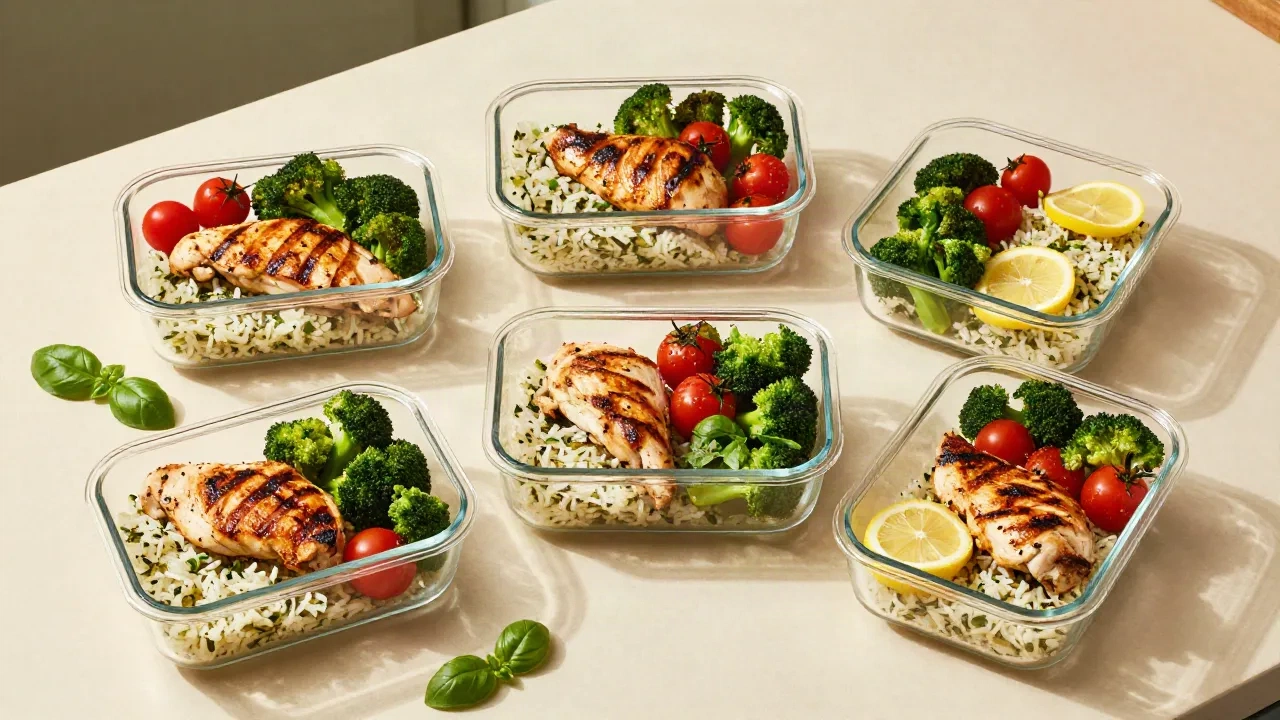
High protein meal prep works when you cook three proteins and two bases in about 90 minutes on one day, then portion by weight. Aim for 30 to 40 grams of protein per container, keep sauces separate, and plan to eat everything within 4 days. The rest of this guide is the order of operations, the numbers that matter, and what the videos leave out.
What does 35 grams of protein actually look like on a plate?
Most meal prep videos show a container and a caption that says "40g protein". They rarely show the weighing. So here are rough cooked weights, which is what you need when you are standing at the counter with a scale.
120 g cooked chicken breast: about 37 g protein
130 g cooked boneless chicken thigh: about 34 g protein
150 g drained canned tuna: about 36 g protein
200 g cooked lentils: about 18 g, so pair them with something else
3 eggs: about 18 g
These are approximations from standard nutrition tables, and brands vary by a few grams. The point is the ratio: a palm-sized piece of meat gets you most of the way, and the base (rice, potatoes, chickpeas) fills in the rest.
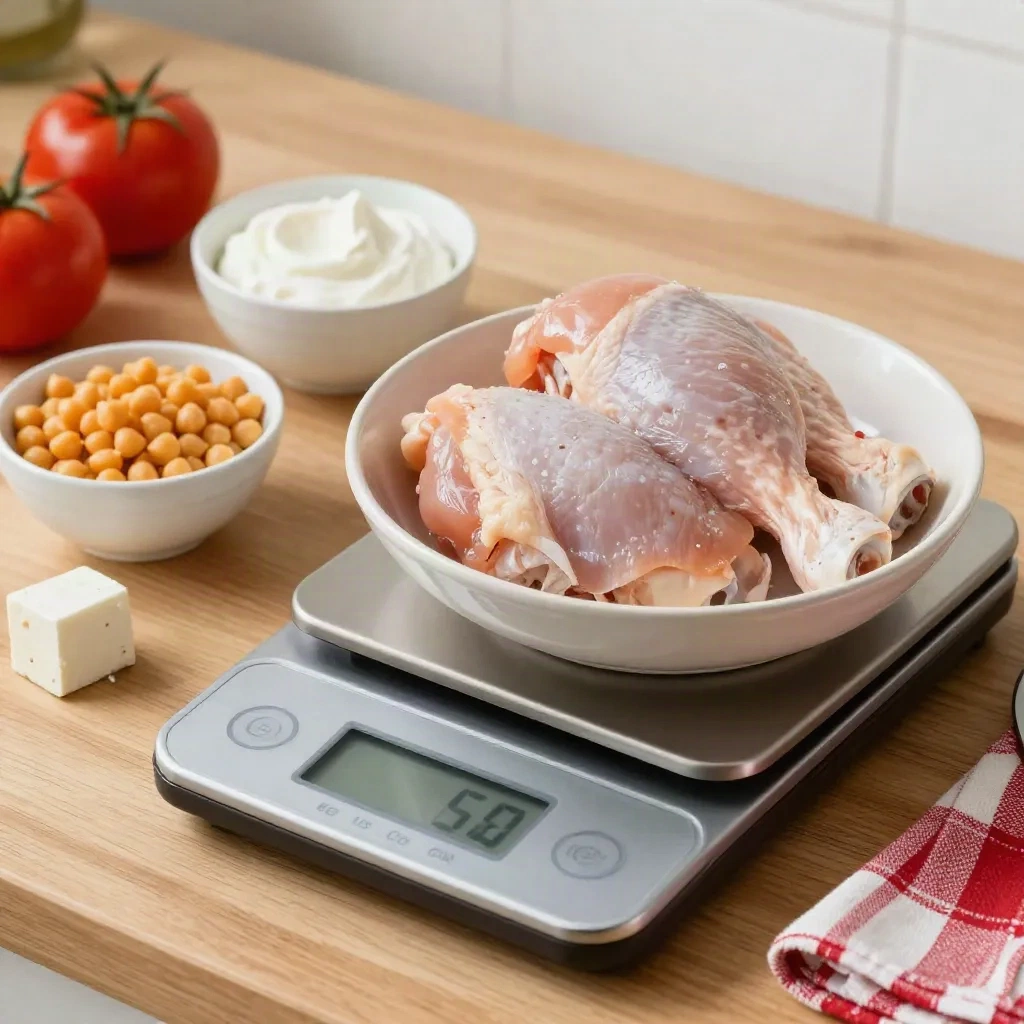
A scale costs less than two takeaway lunches and removes the guessing. Weigh the meat raw for the first week, note how much it shrinks (chicken loses roughly 25% of its weight in the oven), and after that you can portion by eye.
How do you turn a meal prep video into a plan you can cook on Sunday?
Here is where the videos fall short. A 60-second Reel gives you a vibe, not a shopping list. The quantities are spoken fast, the oven temperature appears for half a second, and the prep order is edited out because it is boring.
The fix is to write the recipe down before you shop. Pause once, copy the ingredients, then ask yourself three questions:
How many portions does this make, really?
What is the cooking order, and what can share the oven?
What gets soggy by Thursday?
This is exactly the job a tool that converts the video into a recipe should do for you. The ones that read captions and audio will give you a clean ingredient list. They will not always catch "a couple of handfuls" or a spoken "250" with no unit. Always check any quantity that came from speech, not from text on screen.
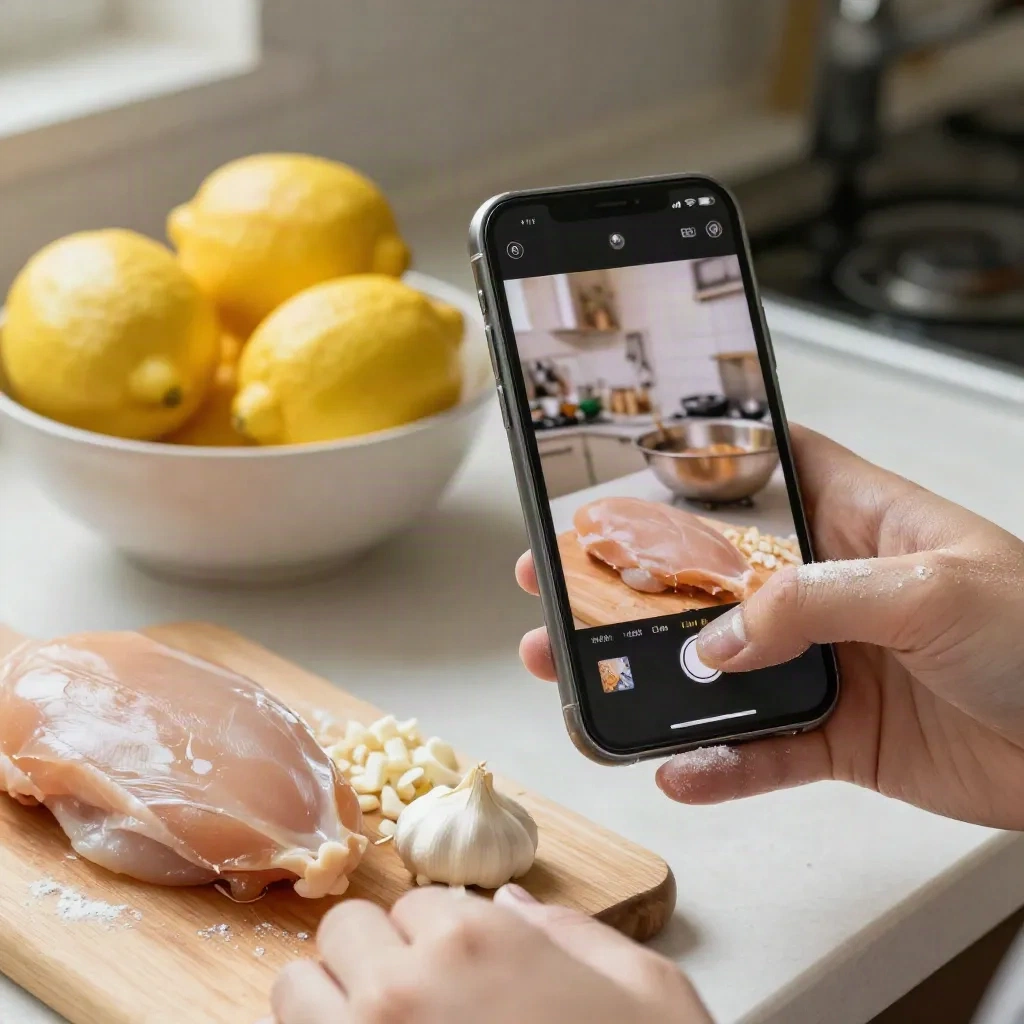
Our rule: if a recipe cannot be rewritten as a numbered list you could read at 19h30 without stress, it is not ready to cook from.
Which proteins survive four days in the fridge?
Not all of them. This is where a lot of high protein meal prep goes wrong, because the dish that looks great on day one turns to cardboard on day three.
Survives well:
Chicken thighs. The fat keeps them juicy after reheating. Skip breast unless you pull it and mix it with a sauce.
Lentils and chickpeas. They improve overnight in a lemon and olive oil dressing.
Hard-boiled eggs, shell on, up to 5 days.
Meatballs (turkey or beef). Bake them at 200 °C for 18 minutes and they reheat without drying.
Skip or eat first:
Fish other than canned. Salmon from the oven on Monday smells like a fish counter by Wednesday.
Scrambled eggs. Rubbery after a microwave.
Anything crumbed. It steams in the container and loses the point of being crumbed.
On timing, the US food safety agency says refrigerated leftovers keep for 3 to 4 days, and should go in the fridge within 2 hours of cooking. That is why a batch of five lunches is really a batch of four, plus one you freeze on day one. Cooked chicken and meatballs freeze well. Rice does too, flat in a bag.
What does a 90-minute Sunday session look like, in order?
The order matters more than the recipes. Here is the sequence that keeps the oven, the hob and your hands busy at the same time.
Minute 0 to 10. Oven to 220 °C. Toss 1 kg of boneless chicken thighs with 2 tablespoons olive oil, 1 tablespoon smoked paprika, 2 teaspoons dried oregano, salt, and the juice of a lemon. Tray goes in at minute 10.
Minute 10 to 25. Rinse 300 g of dry rice (or put 600 g of chickpeas on to heat if you want a Mediterranean bowl). Start it. Chop a tray of vegetables: courgette, red onion, peppers. They go in the oven next to the chicken at minute 25.
Minute 25 to 55. Make the sauce while the oven works. A tzatziki-style one takes 4 minutes: 300 g Greek yogurt, half a grated cucumber squeezed dry, 1 clove garlic, lemon, dill. Greek yogurt is also a quiet protein source, roughly 10 g per 100 g, so a 100 g dollop adds a useful amount.
Minute 55 to 70. Boil 8 eggs for 9 minutes, then into cold water. Cook a pot of lentils if you want a second base.
Minute 70 to 90. Rest the chicken 5 minutes, slice, weigh, and fill the containers. Cool everything uncovered for 20 minutes before lids go on, so you do not trap steam.
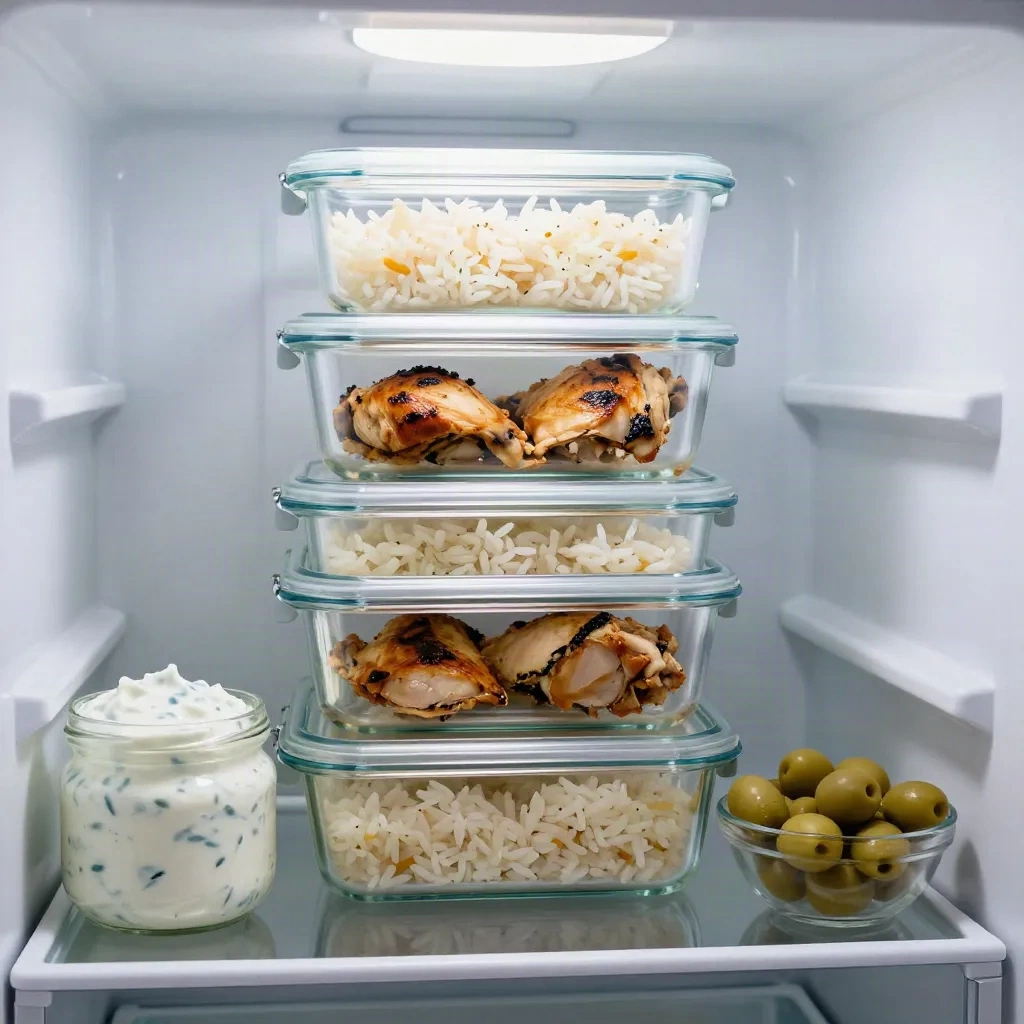
Sauce goes in a separate jar, always. A wet container is what makes day four taste like a lunchbox from 1998.
Can an AI chatbot plan the macros for you?
Partly. A language model is good at the boring arithmetic: scale a recipe from 4 to 8 portions, swap chicken for chickpeas, convert grams to cups, draft a shopping list grouped by aisle. Ask it for "a 1,800 kcal day with 140 g protein" and you will get something plausible.
What it does badly is trust itself on exact numbers. Expect the totals to drift between a first answer and a re-check, and it will happily call a dish "40 g protein" when the ingredient list adds up to 29. So use it for structure, then verify the protein figure against a nutrition database or your own scale math.
A practical prompt that works: paste your ingredient list with weights, ask for protein per portion, and ask it to show the sum line by line. If you cannot follow the sum, do not trust the total.
Dedicated planners handle this differently. They start from calorie and macro targets and build the week from a recipe database, which is faster but less flexible. The trade-off is simple: a chatbot adapts to the recipe you saw on TikTok, a planner adapts you to its recipes.
Is a meal planning app worth paying for?
Worth it if you plan every week and hate deciding. Skip it if you already cook from videos and just need a clean list.
A free tier of a curated planner, like Mealime, gets you dietitian-checked recipes and a grocery list sorted by aisle, but it will not read a video. Apps that import from social links are the opposite: they take whatever the creator posted, mistakes included. Neither will fix a weak routine.
If you want one thing to pay for, pay for the thing that saves your Sunday, not the thing that generates ideas. Ideas are free. Standing in a shop at 6pm without a list is expensive.
Why does meal prep fall apart by Thursday?
Almost never because of the protein. It falls apart because of texture and boredom, and both are fixable on Sunday.
Texture. Rice dries out, vegetables go grey, and a microwave punishes anything cooked past the point of tender. Undercook the vegetables by 3 minutes at the start, since reheating finishes the job. Add a splash of water (1 tablespoon per container) before the microwave, cover loosely, and give it 90 seconds, stir, then 60 more.
Boredom. Five identical boxes is a plan that works for about 48 hours. The cheap fix is variety in the last step, not the first. Cook one big batch of the base, then change the finish: lemon and dill on Monday, harissa and yogurt on Tuesday, olives and feta on Wednesday. Three jars of sauce cost almost nothing and make five containers feel like three different lunches.
Reheating. Eggs and fish are the two ingredients most likely to give you a bad day. Boiled eggs are best eaten cold, peeled that morning. If you keep the egg out of the microwave, most of the problem disappears.
Budget. The cheapest high protein meal prep is built on thighs, lentils, eggs and canned fish, in that order. Chicken breast costs more per gram of protein than thigh in most shops once you account for how much it dries out, and canned chickpeas at roughly 7 g per 100 g drained are the cheapest way to pad a portion without adding meat.
What would we actually cook this week?
If you want a starting point, here is the batch that holds up best. Chicken thighs with paprika and lemon, a pot of lentils with olive oil and red wine vinegar, tzatziki, roasted peppers and courgettes, and 8 boiled eggs. Mix and match into five containers: thighs with rice and veg, lentils with feta and tomatoes, eggs with yogurt sauce and cucumber, and two flexible ones for Thursday and Friday.
That batch lands around 30 to 38 g of protein per container, costs roughly what four sandwiches would, and does not repeat itself on a plate until day three. By Friday you will want something fresh. That is fine. Prep covers four lunches, not five, and a fresh omelette on day five is a perfectly good plan.
High protein meal prep is less about discipline than about a short list: weigh once, separate the sauce, freeze the fifth portion, and write the recipe down before you shop.