Greek Chicken Recipes That Work: 4 Dishes, Tested at Home
Summary
The Greek chicken recipes worth cooking are kotopoulo lemonato (lemon roast with potatoes), chicken souvlaki, kota riganati (oregano chicken) and giouvetsi with orzo. Roast lemon chicken at 200°C for 75 to 90 minutes, marinate souvlaki 2 to 4 hours, and always serve the pan juices. Video versions often drop the quantities, so check numbers against a known ratio before you shop.
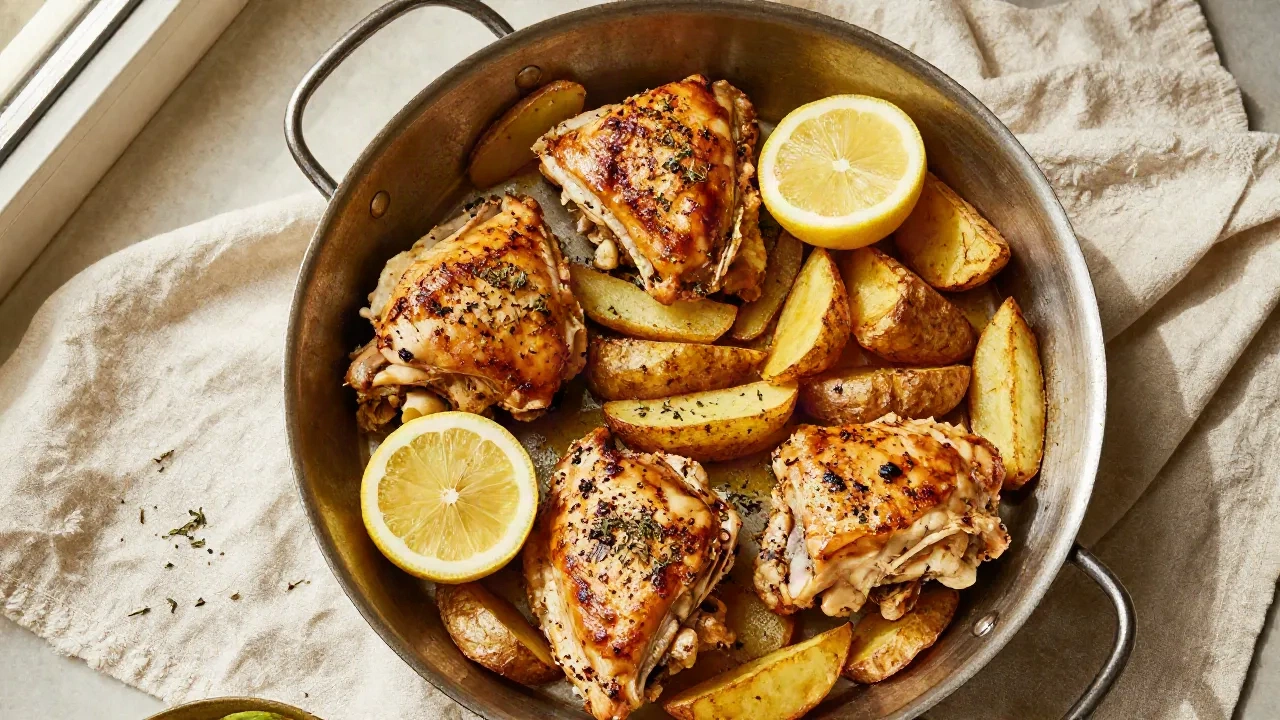
The Greek chicken recipes that hold up in a home kitchen come down to four dishes: kotopoulo lemonato (lemon roast chicken with potatoes), chicken souvlaki, kota riganati (oregano chicken), and chicken giouvetsi with orzo. Each needs one pan or one grill, a handful of pantry staples, and between 25 minutes and 90 minutes. Below is how each one actually works, where the viral videos cut corners, and how to save a recipe from a Reel without losing the quantities.
Which Greek chicken recipes are worth cooking?
I live in Athens and cook this food most weeks, so I have a strong bias: skip anything that calls itself "Greek" because it contains feta and a black olive. The dishes Greeks actually make are simpler and more specific than that.
Here is the short list, with what each one is good for:
Kotopoulo lemonato: the Sunday roast. Bone-in chicken and potatoes in one pan, about 90 minutes, mostly hands-off.
Souvlaki: weeknight grill or skillet food. 20 minutes of cooking after a few hours of marinating.
Kota riganati: the plainest of the four. Chicken, lemon, oregano, olive oil. Nothing to hide behind.
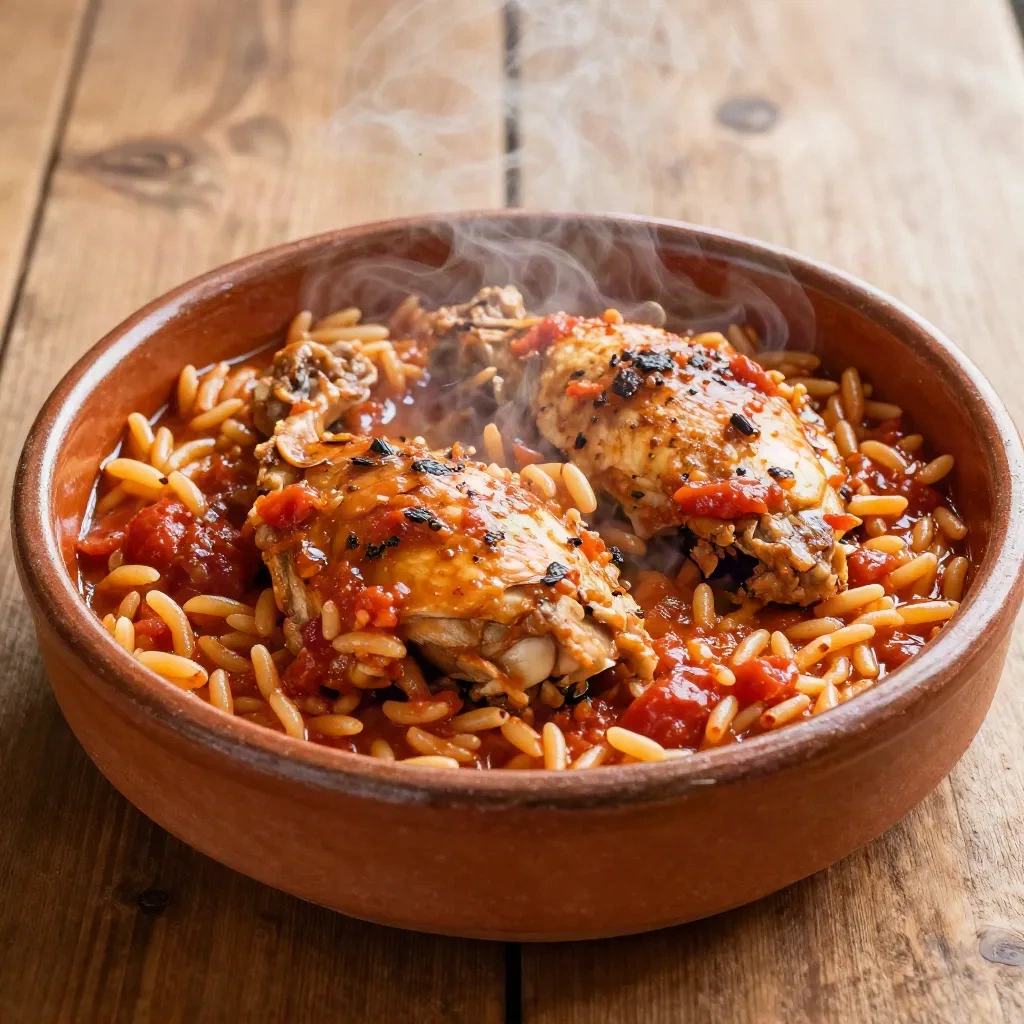
Giouvetsi: chicken baked with orzo in tomato sauce. The one to make when it is cold and you want leftovers.
If you only cook one, make the first. It teaches you the logic that the other three borrow: lots of lemon, dried oregano, good olive oil, and a pan sauce that counts as part of the dish.
What makes kotopoulo lemonato taste Greek and not just lemony?
The lemon is the obvious part. Three smaller choices do the real work.
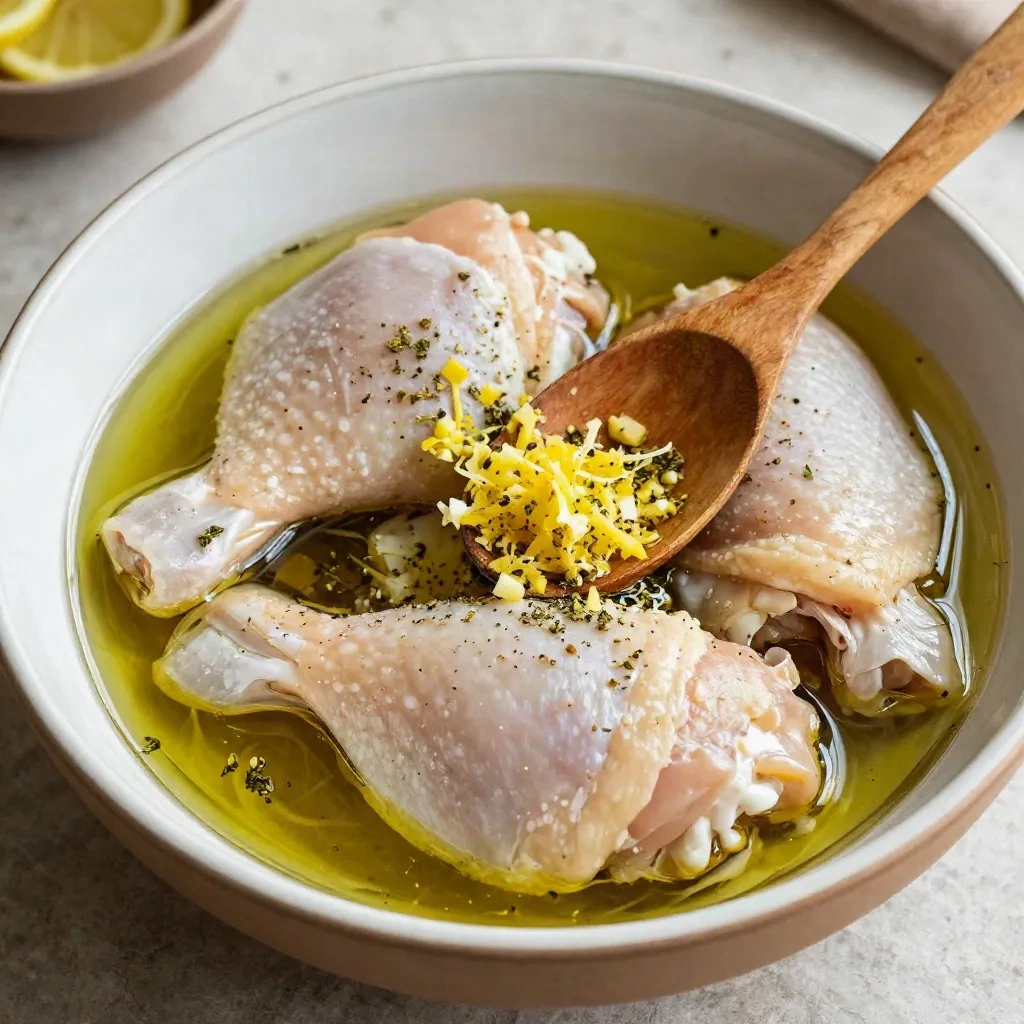
Dried oregano, not fresh. Greek kitchens run on dried oregano, and it goes into both the marinade and the potatoes. Fresh herbs add perfume, but the dried one is what reads as Greek. Use a heaped tablespoon per kilo of chicken.
Two seasonings, not one. Most video versions toss everything into the pan together. The better method, which The Greek Foodie describes well, seasons the chicken and the potatoes separately: a herb-heavy marinade for the meat, a sharper lemon-and-garlic mix for the potatoes. The potatoes need the acid more than the chicken does.
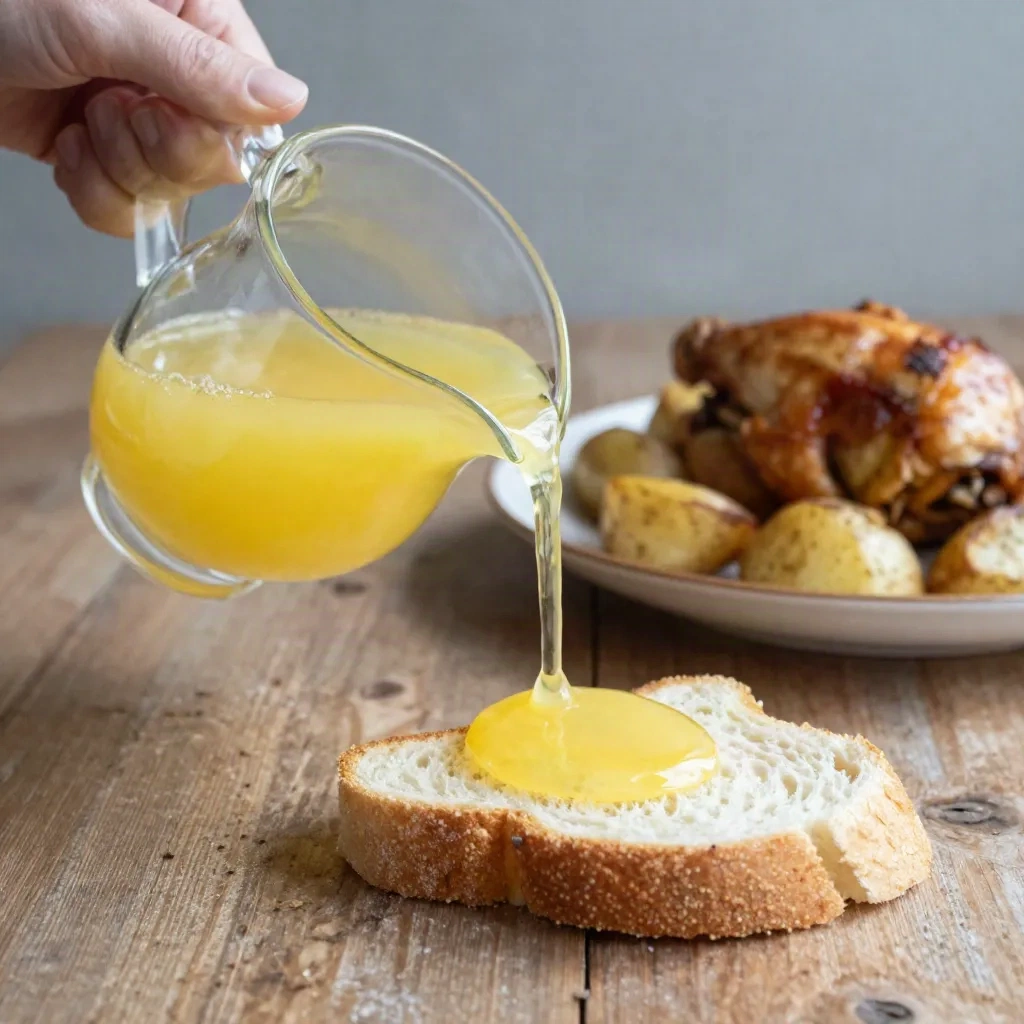
The pan juices are the sauce. Strain them into a small jug and put it on the table. Bread goes into it. Throwing them away is the most common mistake I see in reposted videos.
The method that works for me, in order:
Marinate 1.2 kg of bone-in chicken thighs and drumsticks for at least 2 hours with the juice of 1 lemon, 4 garlic cloves, 1 tablespoon dried oregano, 80 ml olive oil, salt, pepper.
Cut 800 g of waxy potatoes into thick wedges and toss them with the juice of 1 more lemon, 2 garlic cloves, oregano, salt, and 3 tablespoons of olive oil.
Roast at 200°C (390°F), covered with foil for 45 minutes, then uncovered for another 30 to 45 minutes until the skin is deep gold and the potato edges are crisp.
The time range is wide because ovens lie. Go by the skin and by a knife through the thickest potato, not by the clock.
Chicken souvlaki: where the marinade time actually matters
Souvlaki is the one most people get wrong in the opposite direction. The video says "marinate 30 minutes", and the chicken comes out fine but flat.
Two to four hours is the useful window. Less and the lemon has not reached the middle of the cubes. More than 8 hours and the acid starts to turn the breast meat chalky.
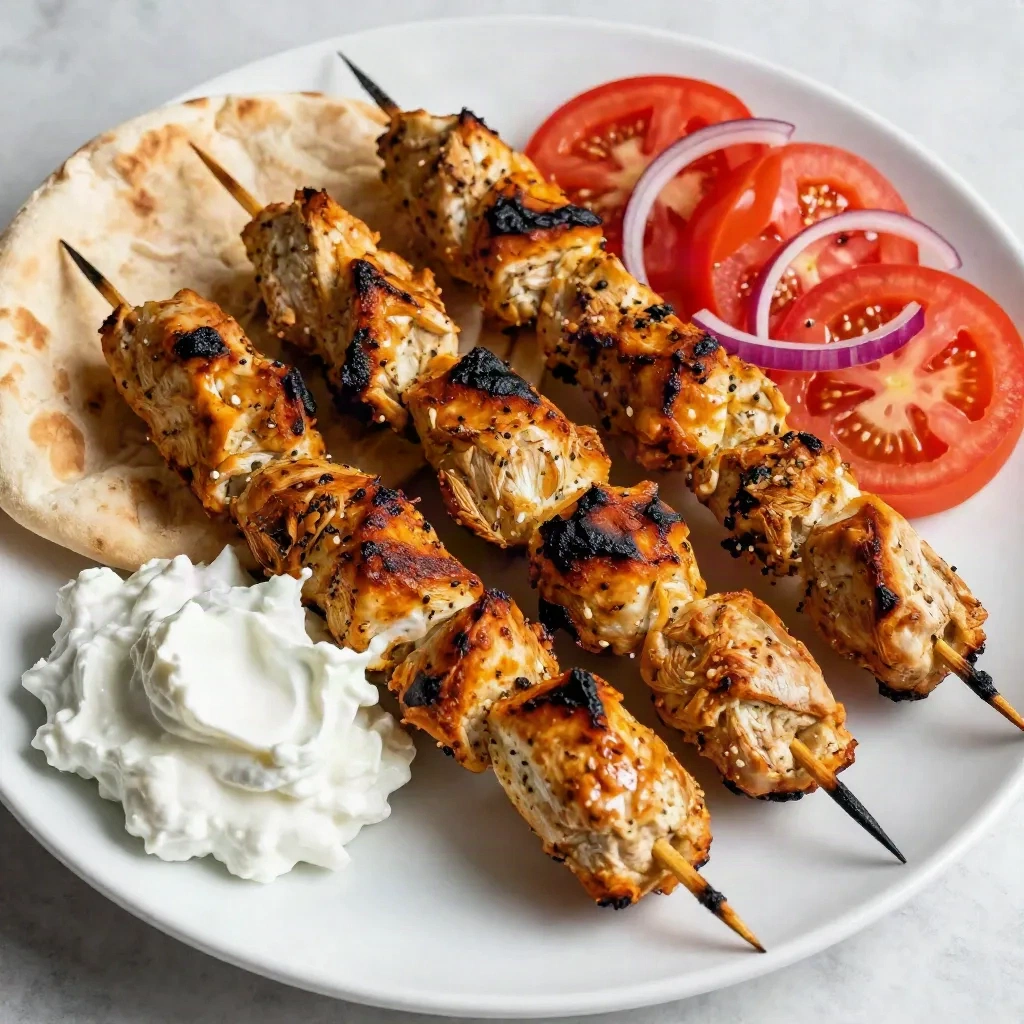
Cut boneless thighs (not breast) into 2.5 cm cubes. Thighs forgive a hot grill; breast dries out in the last two minutes. Marinate with olive oil, lemon juice, garlic, oregano, and a little salt. Thread onto skewers, grill over high heat for 10 to 12 minutes, turning every 2 to 3 minutes, until the edges char and the center hits 74°C (165°F).
Serve it with pita, tzatziki, tomato, and red onion. In Athens the wrap usually includes a few fries, which feels wrong until you try it.
Skip the skewer soak ritual if you use metal skewers, and skip the "Greek seasoning" blend in a jar. It is mostly salt and old oregano.
Kota riganati and giouvetsi: the plain one and the cozy one
Kota riganati is chicken pieces, olive oil, lemon, oregano, salt. That is the whole recipe. It works because everything is exposed: if your oregano is stale or your oil is flat, you taste it. Buy Greek oregano sold on the branch if you can find it, and rub it between your palms over the chicken so the oils release.
Roast skin-side up at 200°C for about 50 minutes, basting once with the pan juices around the 30-minute mark. You will not need a sauce, because the pan makes one.
Giouvetsi is the opposite: a baked dish with a lot happening. Brown the chicken, build a tomato sauce with onion, garlic, and a splash of white wine, then add water or stock, stir in 300 g of orzo, and bake everything at 180°C (350°F) for about 45 minutes. The orzo drinks the sauce and swells.
Two things go wrong. First, too little liquid: orzo needs roughly three times its volume, and you should check it at 30 minutes. Second, no rest. Give it 10 minutes out of the oven so the starch sets, or it looks like soup.
Why video versions of Greek chicken recipes lose the quantities
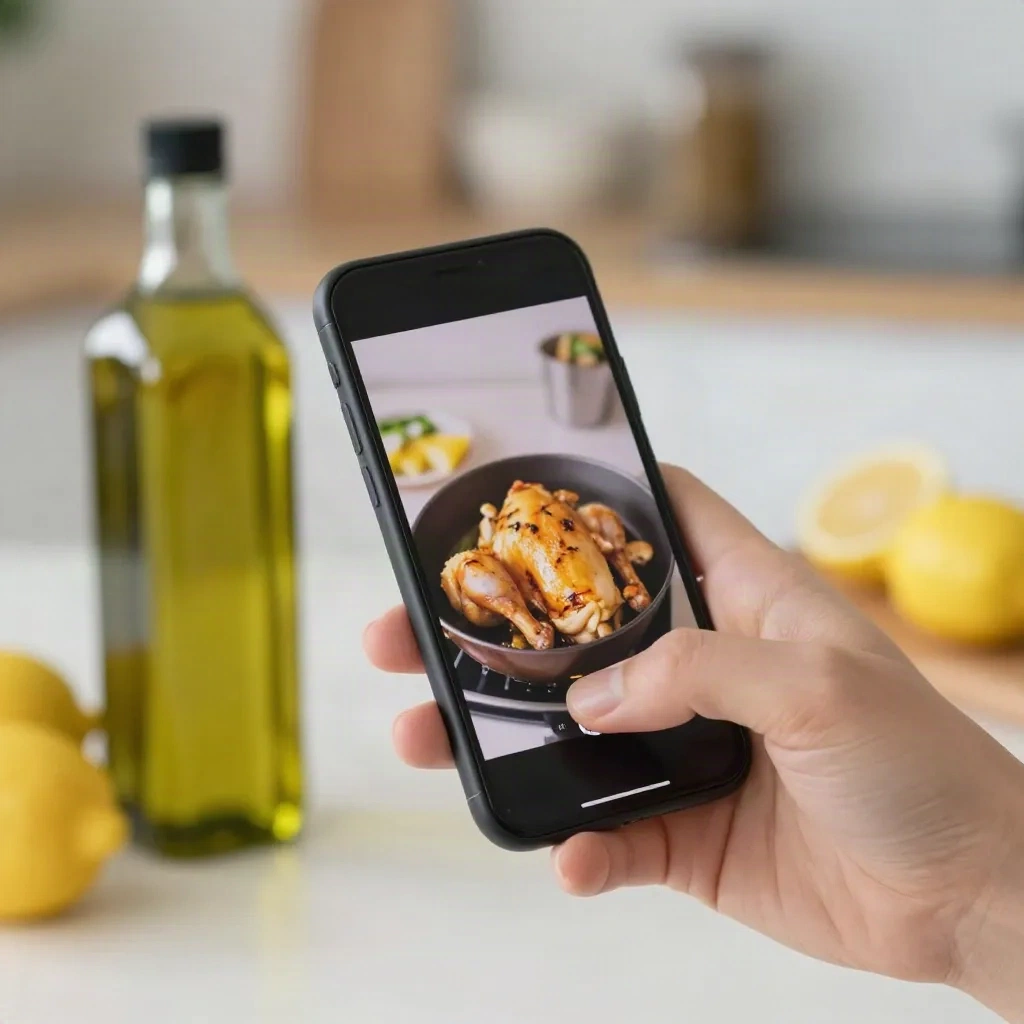
A lot of us find these dishes the same way: a 40-second Reel of someone squeezing a lemon over a pan. It looks right and the recipe is nowhere.
The pattern repeats. The creator says "a good amount of oregano" out loud, there are no on-screen quantities, the caption says "recipe in comments", and the comments say "DM me". A pinch and a teaspoon sound identical when spoken fast.
What the tools tend to catch and miss:
Caption text: usually caught well. If the caption lists ingredients, a good tool will structure them.
Spoken quantities: often missed or mangled, especially "a glass of oil" or "two lemons' worth".
On-screen text: depends on the tool. Some read it, some only read the transcript.
Cooking times: frequently skipped because the video cuts ahead.
So the honest workflow is: save the video, extract what the tool gives you, then check the numbers against a known ratio. For lemon chicken, if the result says 1 tablespoon of oregano for 6 pieces and 250 ml of lemon juice, something is off.
Which tool should you use to save a Greek chicken video?
Here is a plain read of the usual options for this job, based on what each one says it does, and where it stops. The test that matters is simple: does it take a Reel link, and does it give you quantities you can trust?
ReciMe reads Instagram, TikTok, and YouTube links directly, which is what you want for this kind of recipe. The free plan limits imports to 5 per week, enough for a casual cook.
Pestle saves recipes from Instagram Reels and scales units well, but it is Apple-only and the free tier holds 15 recipes.
ChefTap is excellent for blog recipes like the ones above, but it reads webpages rather than video, so a spoken-only Reel needs to be typed in by hand.
A general assistant like ChatGPT can clean up a transcript you paste in and convert "a glass" to millilitres, but it will not watch the video for you, and it will happily invent a missing quantity. Always ask it to flag what the source did not say.
For anything with a link, I start with a video-aware importer and fall back to the written blog version when the numbers look thin. Reel2Recipe itself is built for the first case: convert the video, then read the ingredient list like you would a normal recipe before you shop.
What to serve with Greek chicken, and how to stretch it into leftovers
The sides are as short as the main dishes. A horiatiki salad (tomato, cucumber, red onion, olives, feta, oregano, olive oil) takes 5 minutes and cuts through the richness of the roast. Good bread is not optional when there are pan juices. For souvlaki, warm the pita in a dry pan for 30 seconds per side.
Leftovers are where these dishes earn their place in the week:
Lemon chicken: pull the meat off the bone, mix with the cold potatoes and a spoon of the juices, and reheat in a skillet. It keeps 3 days in the fridge.
Souvlaki: slice and tuck into a pita with yogurt the next day, or toss through a grain salad.
Giouvetsi: loosen with a splash of water when reheating, because the orzo keeps absorbing liquid overnight.
Kota riganati: shred it into a plain omelette or over rice.
If you cook for two, halve the lemon roast and keep the full potato quantity. The potatoes are what people fight over, and they are cheap.
What goes wrong, what to buy, and what to cook first
Four mistakes cover most of the failed attempts I hear about from readers.
The first is a crowded pan. Chicken and potatoes that touch steam instead of roast, so the skin goes soft. Leave a finger of space between pieces, and use a larger pan or two trays.
The second is cold chicken straight from the fridge. Take it out 30 minutes before roasting so the outside does not overcook while the center catches up.
The third is bottled lemon juice. It tastes thin and slightly bitter after 45 minutes in the oven. Squeeze fresh lemons and keep the zest for the marinade, where it adds oil without more acid.
The fourth is salt timing. Salt the chicken at least an hour before cooking, ideally during the marinade. Salting at the end seasons the surface only.
Two shopping points change the result more than any technique.
Olive oil: use a Greek extra virgin for the marinade and a cheaper one for roasting if you must, but taste it raw first. A bitter, peppery finish is normal. A greasy, flat taste means skip it.
Chicken: bone-in, skin-on thighs and drumsticks. Breasts work only for souvlaki, and only if you accept a shorter window and a drier result.
If I had to pick one dish for a first attempt this week, it is the lemon roast. It is forgiving, it feeds four with leftovers, and the pan juices teach you more about Greek cooking than any video. Save the souvlaki for the first warm evening, and keep giouvetsi for when the weather turns.