Summary
This free recipe converter switches cooking measures between cups, tablespoons, teaspoons, milliliters, grams, ounces and pounds, using real density values for 13 common ingredients such as flour, sugar, butter and honey. A second tab translates oven temperatures between Celsius, Fahrenheit and UK gas marks and shows the fan oven equivalent. Everything runs in your browser, updates as you type and needs no account. Use it after pulling a recipe out of a video, or whenever a cookbook speaks a different measuring language than your kitchen scale.
Recipe Converter: Cups to Grams and Oven Temps
Switch any recipe between cups, spoons, grams and ounces, or translate an oven setting from Fahrenheit to Celsius to gas mark. The answer updates as you type.
What happens behind the number
Same-type units are exact
Cups to tablespoons or grams to ounces is pure arithmetic. A US cup is 236.588 ml, a tablespoon is 14.787 ml, an ounce is 28.35 g. No ingredient needed, no rounding tricks.
Cups to grams use density
Volume and weight only meet through density. We store a typical weight per cup for 13 common ingredients, like 125 g of flour or 340 g of honey, then convert through milliliters.
Oven settings use a lookup
Celsius and Fahrenheit use the exact formula. Gas marks are a table of fixed steps (mark 4 is 180 °C or 350 °F), so we pick the nearest one and say so.
A recipe is only as good as its numbers
I got this wrong for years. A recipe from a video says 2 cups of flour, I scoop it straight from the bag, and the cake comes out dry. Two level cups of flour weigh about 250 g. A packed scoop can hit 300 g, and that 20 percent gap is the difference between tender and tough. The same goes for the oven. A Reel shot in Texas says 425, your oven is in Athens and shows Celsius. A wrong guess of 20 degrees turns golden vegetables into charcoal or leaves them pale. Convert once, write it on the recipe, and cook without second guessing.
- Weigh dry ingredients whenever the recipe lets you
- Use an oven thermometer to check the dial
- Fan oven: drop about 20 °C (25 °F)
- Butter, honey and oil weigh very differently per cup
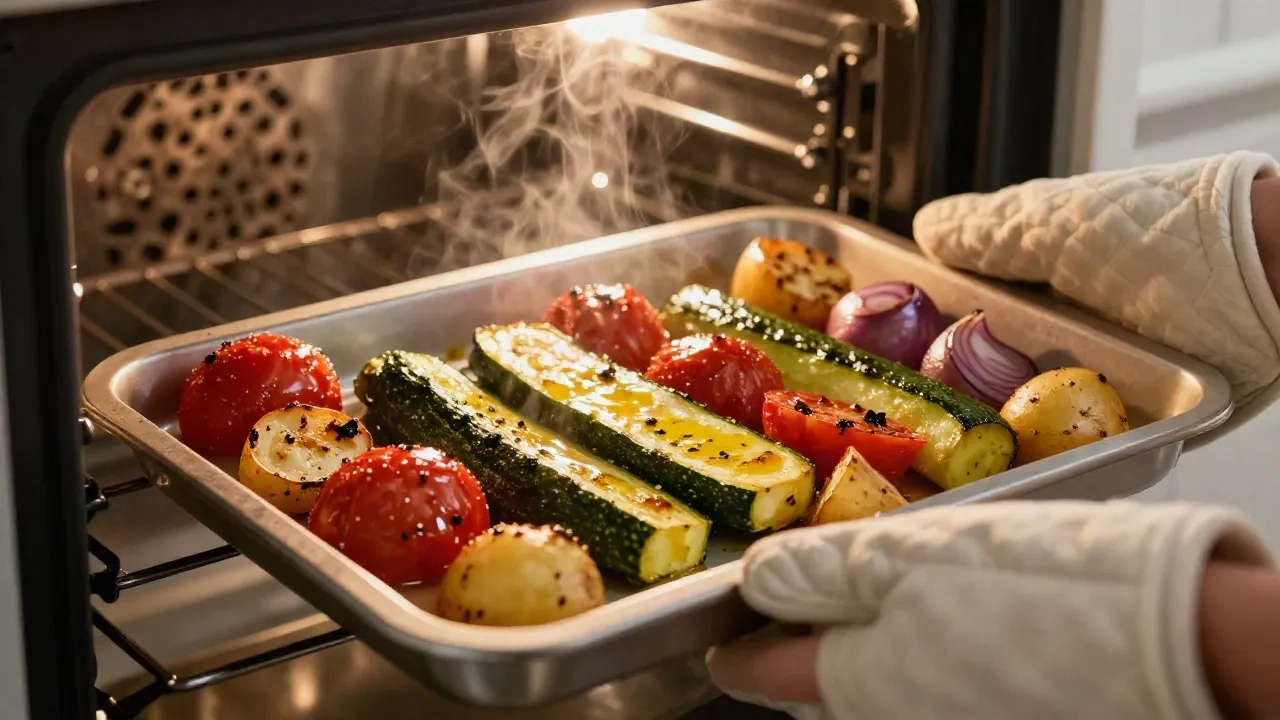
How to convert a recipe from a video
Four moves, in this order, and you stop pausing the clip every ten seconds.
-
1
List every amount first
Pause once and copy all the ingredient lines, including the ones said out loud. Oral measures like a pinch or a splash are guesses, so mark them and taste later.
-
2
Convert weights and volumes
Run each cup, spoon or ounce through the converter above with the right ingredient selected. Round grams to the nearest 5 for flour and sugar, nearest 1 for salt and spices.
-
3
Translate the oven
Type the oven setting from the video into the temperature tab. If you cook with a fan, use the fan oven number the tool shows.
-
4
Write the clean version down
Put the converted list and the oven setting in one place you can reread at 19:30 without stress. A recipe card beats a paused video.
Common questions
Is this recipe converter free?
Where do the cup-to-gram numbers come from?
Why does my flour weigh something different from your number?
Does the converter work for UK and metric cups?
How accurate is the oven temperature conversion?
Should I lower the temperature for a fan oven?
Can it scale a recipe from 4 servings to 8?
Can I convert a recipe from a TikTok or Reel with it?
Got the recipe from a video instead of a card?
Reel2Recipe reads the caption or transcript of a cooking Reel or TikTok and writes out the ingredients and steps for you, ready to convert here.