Pasta alla Norma Recipe: The Catania Way, Step by Step
Summary
This pasta alla Norma recipe serves four in 35 minutes: 400 g rigatoni, 2 large eggplants fried in batches at 170 to 180 C, 500 g passata simmered 5 to 7 minutes with garlic and basil, and 100 g ricotta salata grated on top. Pull the pasta 2 minutes early and finish it in the sauce with a splash of cooking water. Skip fresh ricotta, cream and bacon.
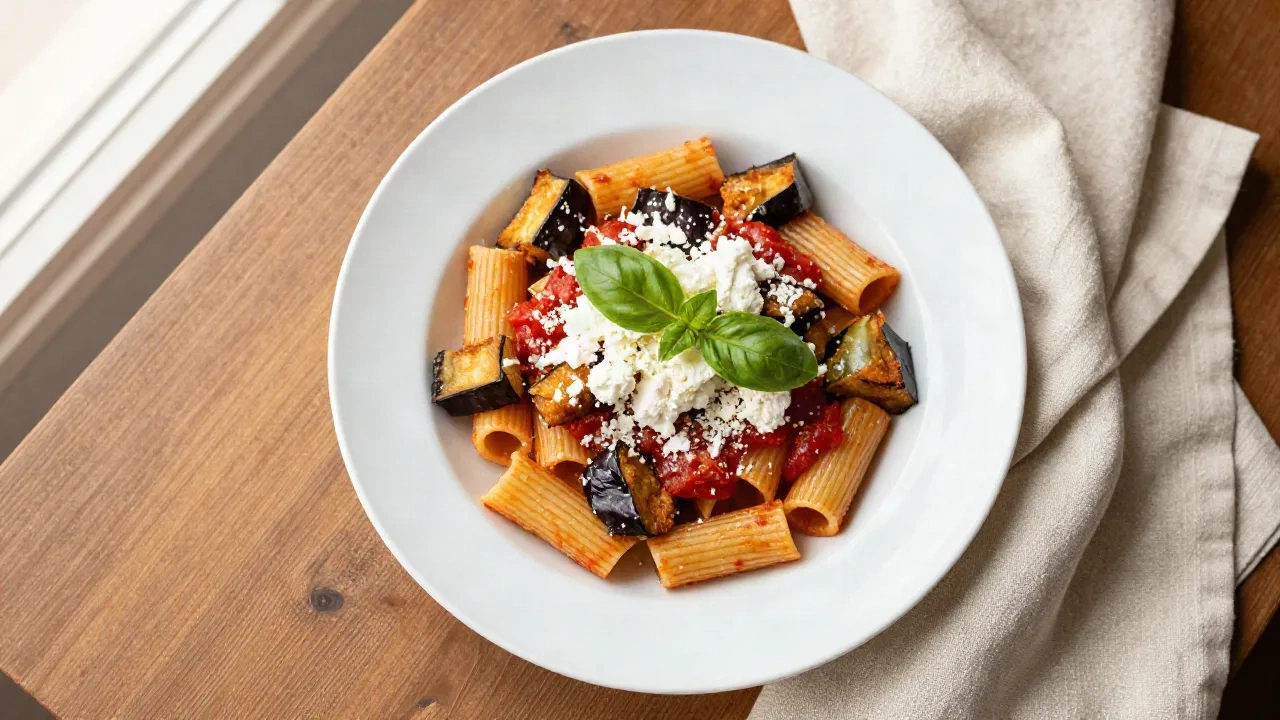
A pasta alla Norma recipe has five parts: short pasta, eggplant fried until deeply golden, a quick tomato sauce, basil, and ricotta salata grated over the top. For 4 people, plan 35 minutes of work, 400 g of rigatoni, 2 large eggplants and 100 g of ricotta salata. Most videos get the eggplant wrong. This version fixes that.
What is pasta alla Norma, and where does it come from?
It is a Catania dish, and in Sicily it is often just called pasta con le melanzane, pasta with eggplant. The name is a nod to Vincenzo Bellini, the composer from Catania who wrote the opera Norma.
The story you will see in every video is that the playwright Nino Martoglio tasted it and said "this is a real Norma", meaning a masterpiece. It is a nice story. Wikipedia flags it as thinly sourced, since the name is not attested until decades after his death. Treat it as local legend, not history.
What nobody disputes is the build: tomato, fried eggplant, basil, ricotta salata. That is the part that matters at the stove.
What do you need to make it for four?
Short and sweet, with one ingredient you cannot swap without changing the dish.
Pasta: 400 g rigatoni, penne or casarecce. Tubes and twists hold the sauce.
Eggplant: 2 large (about 700 g), the glossy purple kind.
Tomatoes: 500 g passata, or 2 cups of a simple homemade sugo.
Garlic and basil: 2 cloves, one big handful of leaves.
Ricotta salata: 100 g, the dry, salted, aged ricotta that grates like a hard cheese.
Oil: olive oil for the sauce, plus enough neutral or olive oil for shallow frying.
Ricotta salata is the line in the sand. Fresh ricotta is wet and mild, and parmesan is nutty. Neither does the job.
Pick the eggplant by feel. It should be heavy for its size, with taut, shiny skin and no soft brown spots. A light, spongy eggplant is old, and it will soak up twice the oil. Buy them the day you cook if you can, since they do not like the fridge for more than a few days. If you cannot find ricotta salata, pecorino or feta will give you a salty hit, but you are making a cousin of the dish, not the dish.
How do you fry the eggplant so it is not greasy?
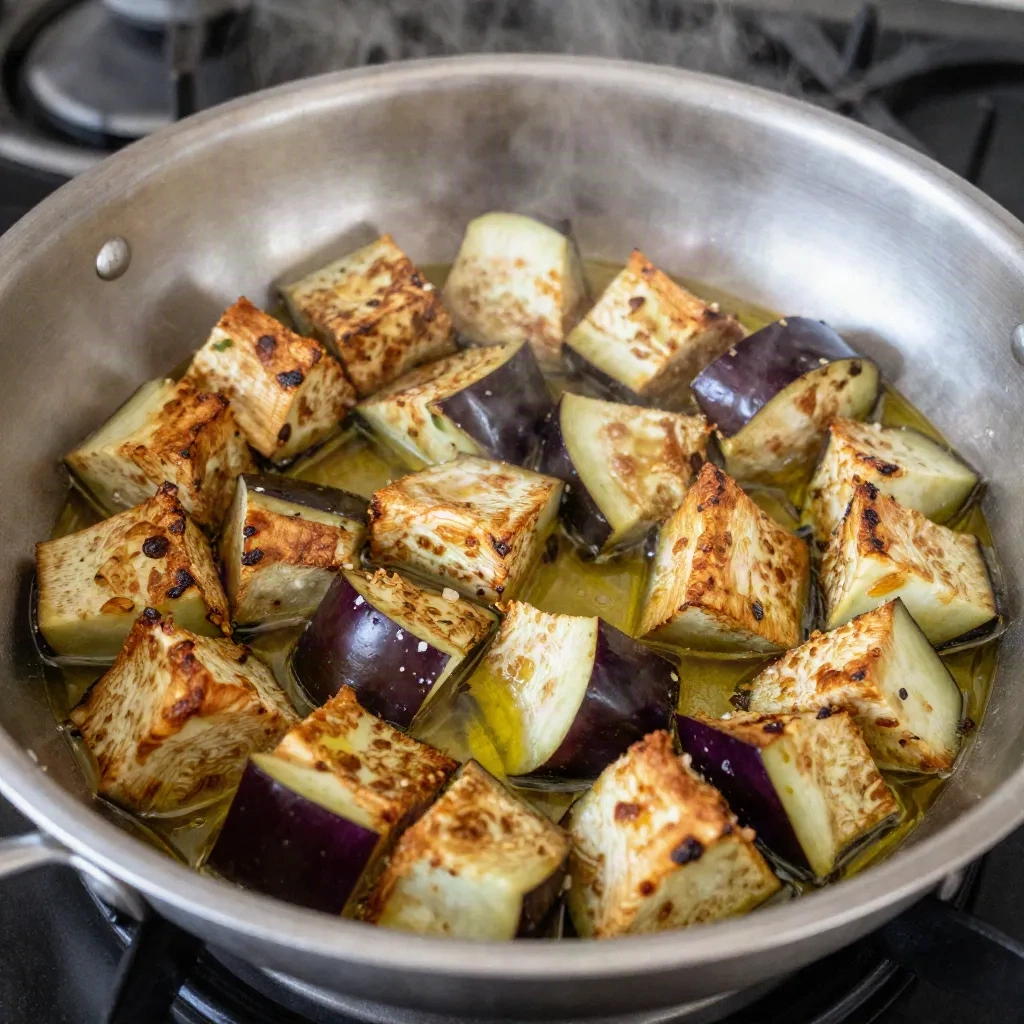
This is the longest section because it is where the dish is won or lost. Cut the eggplant into 2 cm cubes, or into thick half-moons if you want the Catania look. Leave a few strips of skin on, since it adds color and a little bite.
Do you need to salt it first? Modern eggplants are rarely bitter, and some good recipes skip the step. Salting for 20 minutes still helps in one way: it draws out water, so the pieces brown faster instead of steaming. If you are short on time, skip it. If you have the time, do it and pat the cubes dry.
Then the oil. Use a wide pan with about 1 cm of oil over medium-high heat, around 170 to 180 C. A cube dropped in should sizzle at once. Fry in two or three batches, never crowded, for 4 to 5 minutes per batch, turning once or twice. You want deep golden edges and a creamy center. Drain on paper, salt lightly while hot.
Crowding the pan is the classic mistake. The temperature drops, the eggplant drinks the oil, and you end up with a greasy sponge. Batches are boring and they work.
If you would rather not stand over hot oil, you can roast the cubes tossed in plenty of olive oil, 25 to 30 minutes at 200 C, turning halfway. Italian Recipe Book uses this oven method and it is a fair weeknight shortcut. The result is lighter and less caramelized. Frying is the version you will remember.
How do you build the sauce and finish the dish?
Keep it simple. The sauce is a supporting actor, so it should take 10 minutes and one pan.
Warm 3 tablespoons of olive oil with 2 crushed garlic cloves and half the basil over low heat for 1 minute. Do not let the garlic brown.
Pour in 500 g passata, add a splash of water to rinse out the jar, and simmer 5 to 7 minutes until it coats a spoon.
Salt to taste, remove the garlic if you like, and tear in the rest of the basil off the heat.
A pinch of sugar is not necessary if your tomatoes are decent. If the sauce tastes sharp, a longer simmer fixes it better than sugar does.
Putting it together
Boil the pasta in well-salted water, about 10 g of salt per liter, and pull it 2 minutes before the packet time. Keep a mug of the cooking water.
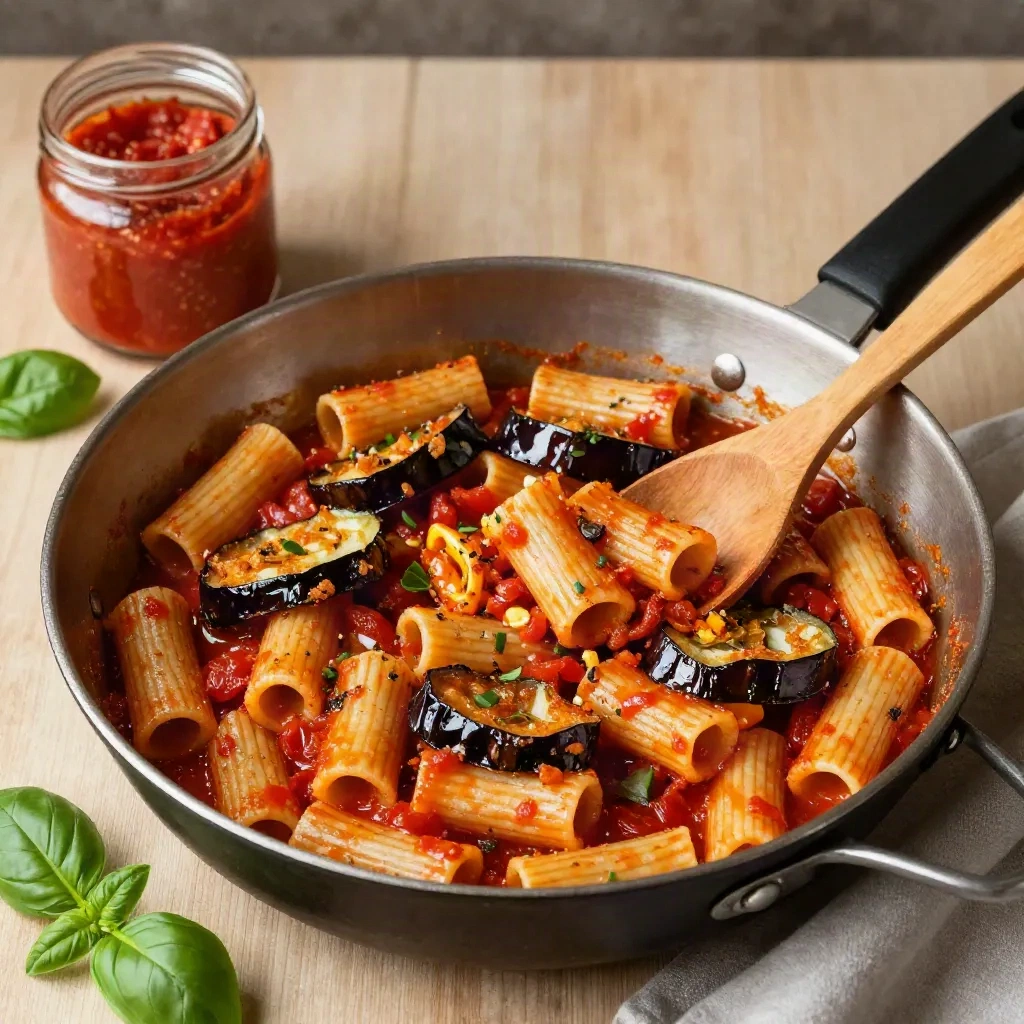
Drop the pasta into the sauce pan with two thirds of the fried eggplant. Toss over medium heat for 1 to 2 minutes, adding splashes of pasta water until the sauce clings and shines. The starch in the water is what makes it glossy.
If the pasta looks dry in the pan, add water, not more oil. If the sauce looks thin, keep tossing over the heat for another 30 seconds, because the pasta keeps drinking as it cooks. Taste a piece of pasta before you plate: it should have a little resistance at the center, since it finishes in the sauce.
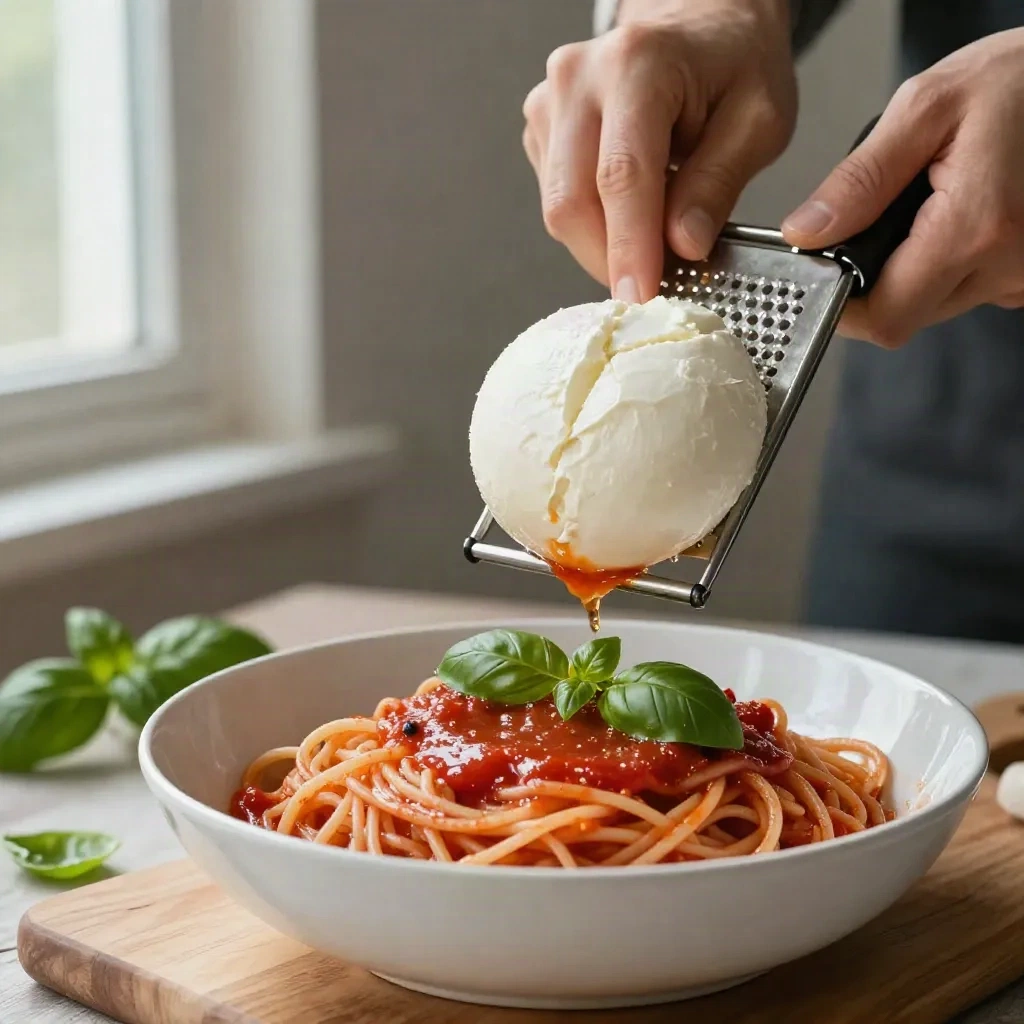
Plate it, lay the remaining eggplant on top, add a fresh basil leaf, and grate the ricotta salata over everything at the table. In Catania, families often leave the rest of the cheese, the grater and a plate of extra fried eggplant in the middle of the table, so everyone can add more. Copy that. It is the best habit in the dish.
Why do videos of this recipe go wrong?
The dish is a favorite on TikTok and Reels because the finished plate looks great. The recipe on screen is another matter. Four things get lost between the video and your kitchen:
The eggplant quantity. Creators often say "two eggplants" without telling you their size. A large one weighs 350 g, a small one half of that.
The oil. "A generous amount of olive oil" in a voiceover is not a measurement. Shallow frying needs roughly 1 cm in the pan.
The cheese. The caption says "ricotta" and you buy a tub of fresh ricotta. It melts into the sauce and turns it pink.
The timing. The clip cuts from raw cubes to golden cubes. The 15 minutes of frying in batches vanish.
This is the use case we care about most at Reel2Recipe: you paste the link, and the tool pulls the ingredients and the steps from the captions and the transcript into a recipe card. It reads what is written and said, so check the quantities that were only spoken out loud, and check the cheese. A tool that saves recipes from Instagram and TikTok is also useful once you find a version you like:
If you cook from web recipes as much as from video, a clipper that imports from almost any page is the other option:
Which variations are worth trying, and which should you skip?
Worth it: baked ricotta salata. Some Sicilian cooks put the cheese on top and pass the plate under the grill for 2 minutes, for a golden crust. It is not the Catania classic, but it is a real thing and it works.
Worth it: spaghetti instead of tubes. Plenty of Sicilian homes use spaghetti. Tubes hold more sauce, spaghetti is more traditional on some tables. Both are fine.
Skip: cream, bacon, mozzarella. Each one turns a light dish into a heavy one, and each makes the eggplant disappear.
Skip: peeling the eggplant completely. You lose color and texture for no gain. Stripe-peel it, or leave the skin on.
Skip: raw garlic stirred in at the end. It overwhelms the basil. Cook it gently in the oil and take it out.
Can you make it ahead, and how do you store it?
The sauce keeps in the fridge for 3 days, and you can freeze it for up to 3 months. Store it separately from the pasta and the eggplant. Fried eggplant is best the same day, but it reheats well in a hot pan for 2 minutes.
Dressed pasta does not improve overnight, because the pasta keeps absorbing the sauce. If you are cooking for a Sunday lunch, make the sauce and fry the eggplant in the morning. Boil the pasta at the last minute. Saving the recipe in an app means the quantities and the order are on your phone when it is 19:30 and the oil is hot:
And if you plan a week of meals around it, a calendar-first planner keeps the grocery list honest:
Is pasta alla Norma worth the effort?
Yes, with a caveat. It is cheap, it is mostly vegetables, and it looks like a restaurant plate. But it asks for 20 minutes of attention at the frying pan, and a rushed version tastes like greasy eggplant in tomato sauce.
The verdict: make it on a weekend evening, for people who like eggplant, and do it properly once. After that, the roasted version covers your Tuesdays. Just do not skip the ricotta salata.